Destined Rivals Is Doing the Opposite of What Modern Sets Do
The default fate of a modern chase shelf is a slow bleed. This one is compounding instead, and the sixty-day column proves it.
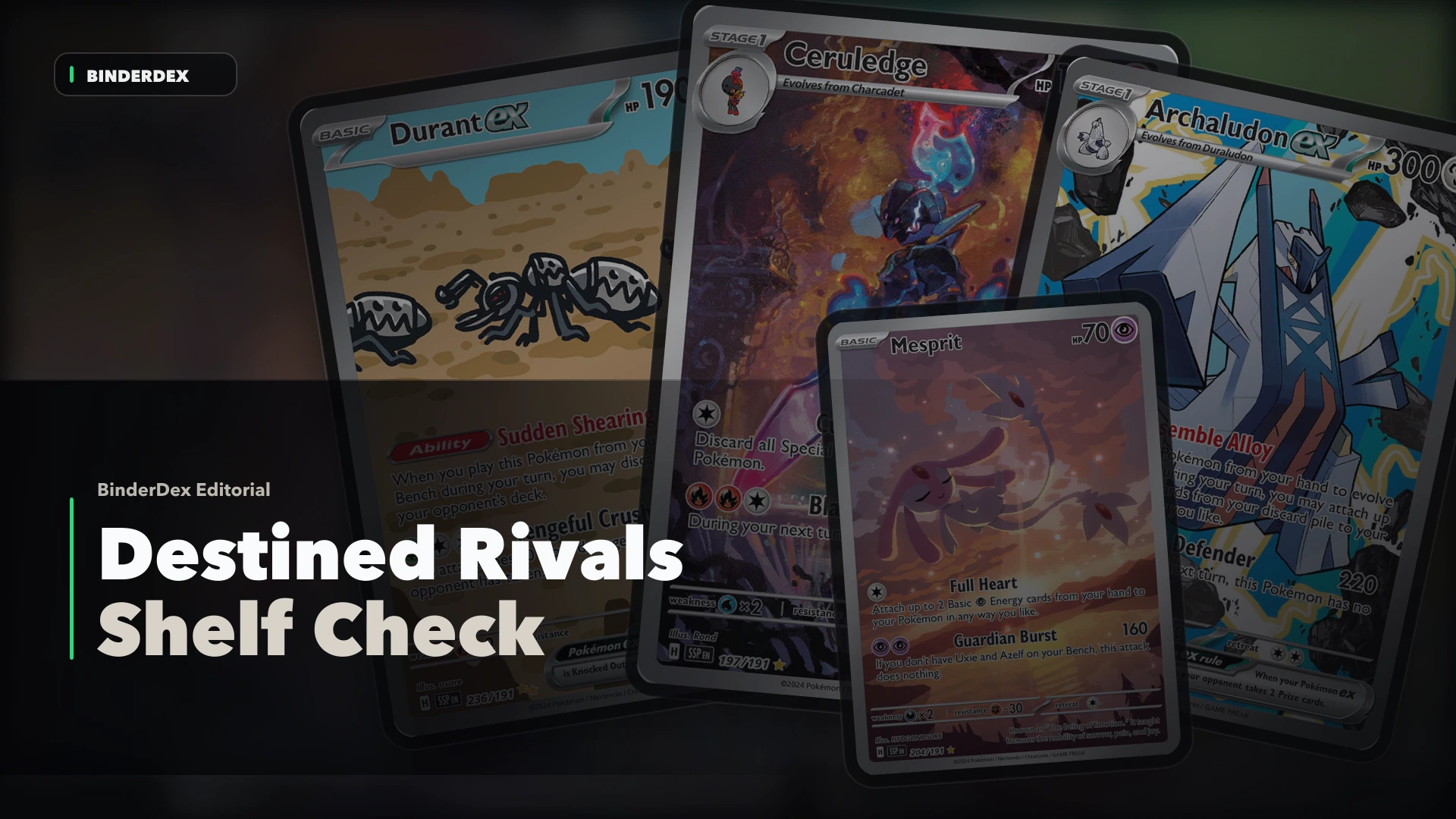
A modern Pokemon set's chase shelf has a default fate: launch hot, bleed for months as supply catches demand, then flatten somewhere humbling. Destined Rivals had every reason to follow that script — heavy print, a year on shelves, sealed product still everywhere. Instead, the June 10 BinderDex rows show the entire top board positive over thirty days, and more positive over sixty.
- All six top Destined Rivals chase cards are up over thirty days; all six are up more over sixty — a compounding pattern, not a dead-cat pop.
- Team Rocket's Mewtwo ex leads at $571.18, up $30.98 over thirty days and $54.39 over sixty.
- Cynthia's Garchomp ex has the strongest sixty-day slope: +$73.78 to $290.29, even with a slightly red week.
- The mid-shelf moves too: Team Rocket's Moltres ex +$25.35 and Nidoking ex +$20.49 over thirty days — this is not just the #1 card dragging an average.
- Data: BinderDex Near Mint rows, June 7–10, 2026. This page connects to our launch-window review and the sealed-vs-singles math.
The Shelf, In One Table
BinderDex Near Mint rows, June 7–10, 2026. Read the columns left to right and the shape is the same on every line: small week, solid month, bigger two months. That is a grind, and grinds are the chart shape supply problems do not make.
Why This Is Strange
Sealed Destined Rivals is not scarce. Our sealed-vs-singles breakdown priced booster boxes at $603.53 against a $161.64 original US MSRP — people are still cracking this set every day, which means new copies of every card on the table above keep entering the market. A chase shelf that climbs while its own supply grows has only one available explanation: demand is growing faster.
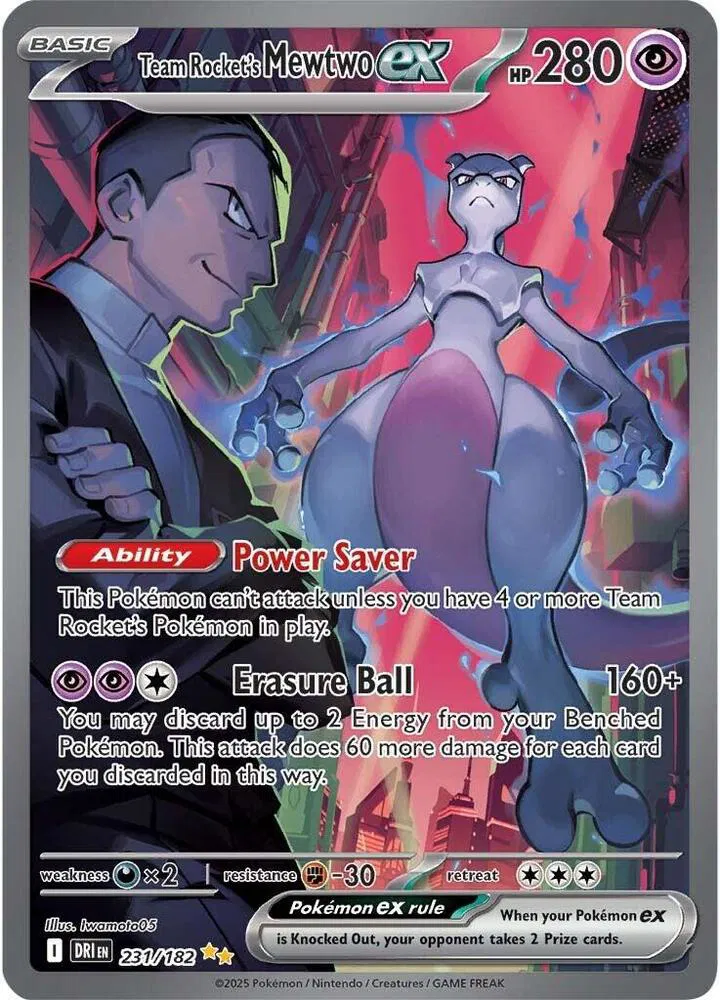
The set's ceiling card: $571.18, with every movement window positive. Supply keeps coming and the price does not care.
Price and chart data update with BinderDex · Last refreshed Oct 11, 2026. Editorial commentary reflects the article's published snapshot.
The demand story is not mysterious — it is the one our launch review flagged when the set was new: Team Rocket is a nostalgia franchise inside the nostalgia franchise. Trainer-owned Pokemon with villain branding gave this set a collector identity that survives the booster-box math. A year later, the identity is winning the argument with the print run.
A chase shelf that climbs while its own sealed supply keeps being opened has exactly one explanation: demand is outrunning the printer.
The Card-Level Reads
Mewtwo ex is behaving like a set anchor, not a spike. +$8 weeks and +$31 months is the boring kind of strength. Cards this visible rarely move quietly unless the buying is broad — one whale produces lumps, not slopes.
Garchomp ex is the sixty-day story. A red $2.77 week against a +$73.78 two-month climb is what accumulation looks like in a lane with regular sales: small pullbacks inside a trend.
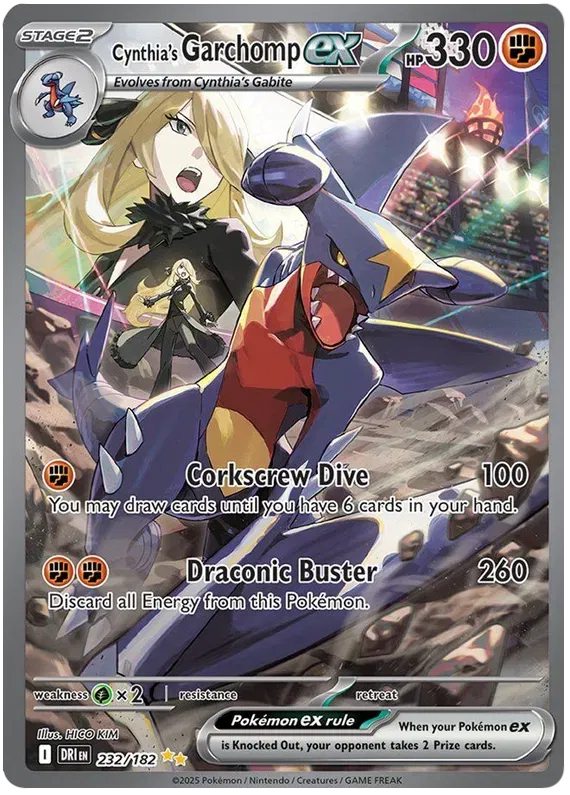
The strongest sixty-day slope on the shelf: +$73.78 to $290.29. The weekly wobble is noise inside that trend.
Price and chart data update with BinderDex · Last refreshed Oct 11, 2026. Editorial commentary reflects the article's published snapshot.
The mid-shelf confirms it. Moltres, Nidoking, and even $80 Misty's Psyduck show the same left-to-right shape. When a set's #5 and #6 cards grind upward with its #1, the bid is for the set, not a card.
One honest caveat for the whole table: these are Near Mint rows on a modern set with real sales volume, so the deltas are more trustworthy than the thin vintage rows our spikes column wrestles with — but "more trustworthy" still means endpoint math between snapshots, not a sales ledger.
What Would Change This Read
Three things would end the grind, and they are all checkable in future rows: a reprint wave announcement (watch sealed prices crack first), the Team Rocket theme returning in a newer set and cannibalizing the bid, or the sixty-day columns flattening while sealed keeps moving — the signature of cracked supply finally catching up. None of the three is visible in the June 10 data. Until one shows up, Destined Rivals is the modern set aging like it read a different script — and the chase shelf, not the sealed box, is where that script is being written.
Know exactly what is in your collection.
Download BinderDex on iPhone or Android to track exact printings, organize your binders, and follow card and sealed product values in one place.
Prefer mobile?