PSA 10 vs PSA 9: How Collectors Compare Card Premiums
The premium only matters when the goal needs it.
Picture three tabs open for the same card: a raw copy, a PSA 9, and a PSA 10. The 10 is louder, but loud is not the same as useful. Lock the set, variant, language, cert, population context, recent sold spread, photos, and the reason the card is in the collection. A registry chase may point toward the 10. A character binder, display shelf, or set slot may already be solved by a strong PSA 9.
- Compare the exact card, set, language, cert, and slab photos before comparing price.
- Check the PSA 10 population against PSA 9 and lower grades, then read that beside current sold outcomes.
- Separate eye appeal from the label. Some 9s look excellent; some 10s carry centering or print quirks collectors still notice.
- Name the collector job. Registry, resale prep, display, and character-collection goals do not ask the same question.
- Track PSA 10 and PSA 9 separately when the spread is thin, jumpy, or based on too few sales.
Collector decision
A premium has to buy something the collection can name. That might be top-label scarcity, registry progress, stronger resale familiarity, or the simple satisfaction of owning the best available version of a favorite card. Without that job, the 10 can pull attention away from the easier question: would this exact copy make the collection feel finished?
PSA 9 is not a failed PSA 10 purchase when the owner wants clean eye appeal, a complete set slot, or a character card at a calmer price. PSA 10 is not automatically wasteful either. On cards with narrow top-grade populations or a goal that explicitly requires the top label, the premium can be the whole reason the card is under review.
Take a collector comparing Mega Gengar ex, Ascended Heroes 284/217. If the goal is a display card next to other Gengar favorites, a centered PSA 9 with clean holo and a clear case may do the job. If the goal is a top-grade Gengar run, the same PSA 9 discount may not solve anything. The card did not change. The job did.
- Population spread: Number of 10s versus 9s and lower grades. Population context helps show whether the 10 is scarce or simply more expensive.
- Sold spread: Recent PSA 10 sold outcomes versus PSA 9 sold outcomes for the same card, not broad grade assumptions.
- Condition sensitivity: Centering, surfaces, edges, print lines. Some cards have a meaningful 10 barrier. Others have many high-grade copies.
- Collector goal: Registry, display, binder, character chase, budget discipline. The better grade depends on what job the card does in the collection.
Price evidence matters, but it needs the right source. Use how to check Pokemon card value to separate marketplace listings, sold-history context, and graded-price references before one number becomes the decision.
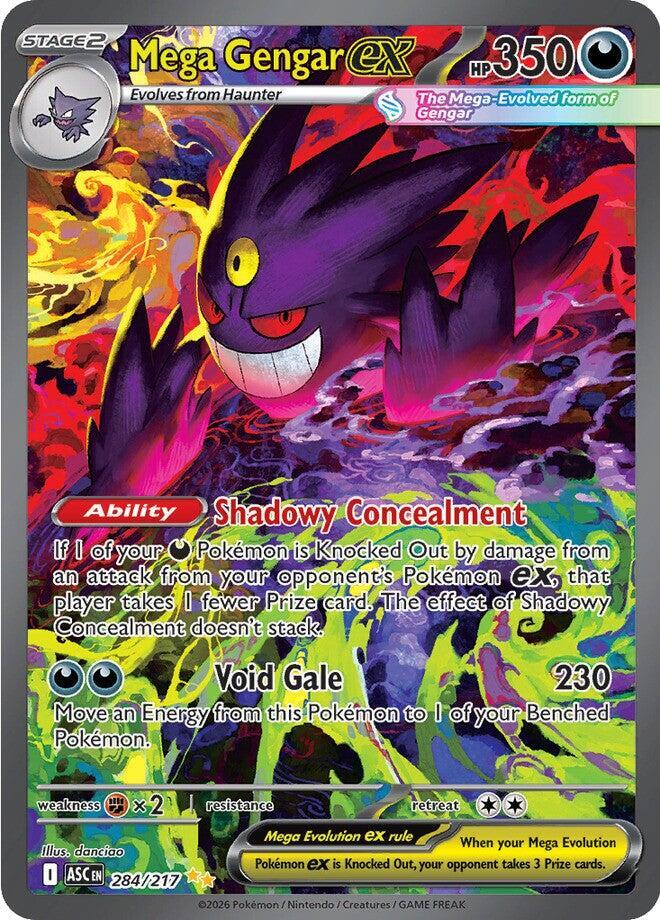
Grade premiums only make sense when the exact card, condition sensitivity, population context, and collector goal are all part of the comparison.
Price and chart data update with BinderDex · Last refreshed Oct 11, 2026. Editorial commentary reflects the article's published snapshot.
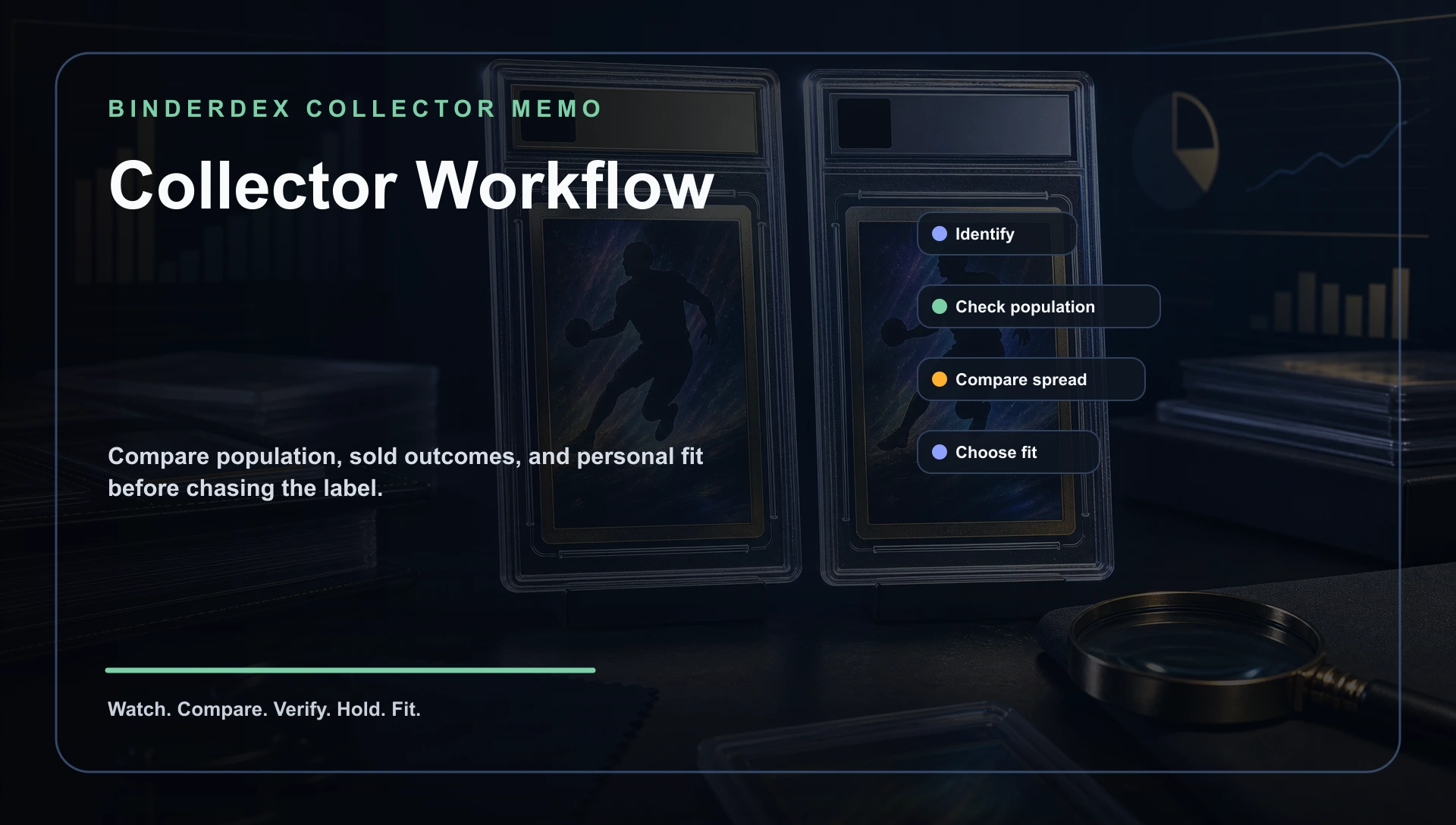
The comparison workflow
1. Start with the exact card and cert context
Compare the exact card, set, variant, language, and cert context. A low-pop vintage holo and a modern card with many high-grade copies are different decisions. The grade label becomes useful only after the card identity is locked.
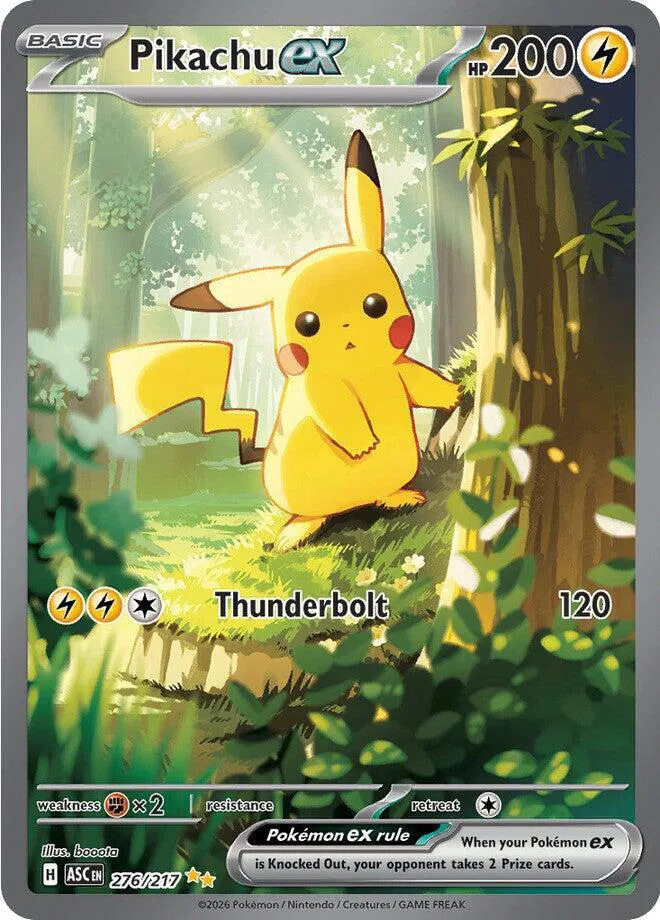
This prevents grade blending. Pikachu ex, Ascended Heroes 276/217 is not every Pikachu ex. English, Japanese, promo, reverse, special illustration, and damaged copies all need their own lane. For raw candidates, start one layer earlier with how to grade Pokemon cards and what collectors should check first.
2. Treat population as supply context
PSA population data can show how many copies have been graded at each level, but it does not tell you everything about demand, resubmissions, crossover attempts, or collector preference. Read the population report as supply context, then compare current sold outcomes and the role of the card in your own collection.
Population is a supply signal, not a verdict on fit. A card with many PSA 10s can still matter to a collector building a favorite-character shelf. A card with very few 10s can still be the wrong target if the owner only wants the artwork in a clean slab.
3. Compare sold spread and eye appeal together
Sold spread is the price gap between the PSA 10 and PSA 9 for the exact card. Eye appeal is what the collector can see in the slab: centering, print lines, surface look, corners through the case, label, and case condition. Both matter because a strong-looking 9 can be more satisfying than a weak-looking 10 for some collection goals.
The market may price the label, but the owner has to live with the card. Narrow spreads can make the 10 easier to defend. Wide spreads ask for a better reason than "higher number." If the PSA 10 copy has front centering that bothers you every time you look at it, the label did not erase the issue.
4. Ask whether the premium changes the collection
Registry collectors may need the PSA 10 because the label is the goal. Artwork collectors may already be done with a clean PSA 9. Sentimental display cards may care more about presentation than grade perfection. The same spread can feel reasonable to one collector and unnecessary to another.
This is where the note should get plain. "I want the PSA 10 because this is my top-grade Gengar run" is different from "I feel like I should want the 10." One is a collection goal. The other is label pressure.
5. Keep a watchlist instead of forcing the decision
When the spread feels unclear, watch both grades. Track the PSA 10 and PSA 9 separately in BinderDex so the decision does not collapse into one card name. Over time, the sold context, availability, and your own interest level will show whether the premium still fits.
Separate watchlist entries keep the spread honest. The Watchlist is useful here because the PSA 10 and PSA 9 can move differently even when the card name is identical. Add a short note beside each one: "10 only if spread narrows" or "9 works if photos show clean centering."
Examples that change the answer
These examples use BinderDex source rows recorded on June 3, 2026. They show how the one-grade question changes by card, not by slogan.
The June 4 BinderDex source check added fresher raw context for the same kind of decision: Pikachu ex 276/217 at $1,446.98 in Collectr NM holo and Mega Gengar ex 284/217 at $1,360.59 in Collectr NM holo. Those rows do not answer PSA 10 versus PSA 9 by themselves. They set the raw anchor you compare against current grade-specific sold evidence.
The useful comparison keeps the exact card, raw context, graded context, and collector goal separate.
| Card | Rows checked | Better route read | What the spread should make you ask |
|---|---|---|---|
| Mega Gengar ex, Ascended Heroes, 284/217 | PriceCharting ungraded $1,370.33; Graded 9 $1,325.00; PSA 10 $3,299.00 | PSA 10 is the upside route, but the 9-level row is not clearly above raw in this snapshot. | Does the collection need top-label Gengar badly enough to accept the PSA 9 downside? |
| Pikachu ex, Ascended Heroes, 276/217 | PriceCharting ungraded $1,292.89; Graded 9 $1,289.95; PSA 10 $3,734.02 | The PSA 10 premium is large, while the 9-level context is close to raw. | Is the goal top-grade ownership, or would a clean raw copy solve the same need? |
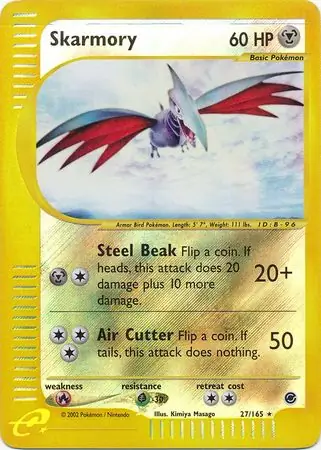
| Skarmory, Expedition, 27, Holofoil | PriceCharting ungraded $52.50; Graded 9 $392.74; PSA 10 $11,250.00 | Older holo top-grade rows can be extreme and need sold-context verification. | Is the 10 actually available and supported by recent sales, or is this a low-pop headline? |
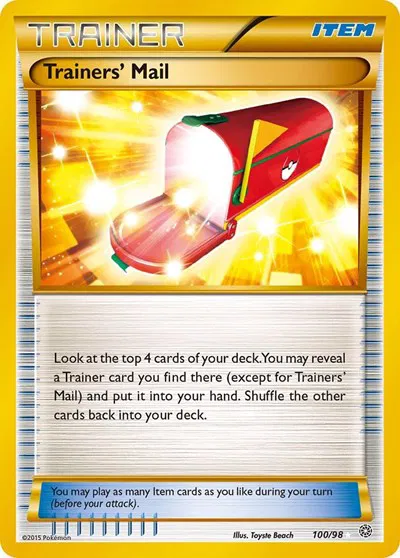
| Trainers' Mail, Ancient Origins, 100 | PriceCharting ungraded $7.15; Graded 9 $39.78; PSA 10 $89.00 | A PSA 10 can be higher, but the absolute dollars may be too thin for grading effort on every copy. | Would the same time and fee budget improve the collection more elsewhere? |
Here are two realistic reads.
For a display-first collector, a clean PSA 9 Pikachu ex, Ascended Heroes 276/217 may beat waiting for a 10 if the card already fills the page, the photos look strong, and the premium would crowd out other cards in the same binder.
For a top-label Gengar collector, the PSA 10 Mega Gengar ex, Ascended Heroes 284/217 may stay on the watchlist even when a PSA 9 is available. The discount is real, but it does not finish the target.
Those routes keep the comparison practical. The card, the evidence available now, and the collection goal decide how much research the premium deserves. The label is only worth the spread when it solves the actual collector job.
The evidence you need
Before money moves, another collector should be able to follow the reasoning from the card to the decision. The exact card is identified, condition language is honest, the route is named, and any factual claim has a current source. Missing evidence does not kill the idea; it keeps the answer provisional.
Grade-specific evidence is especially important here. One blended card price is not a PSA 10 vs PSA 9 comparison. Track population, sold outcomes, availability, eye appeal, and collection role separately for the 10 and the 9. Then ask what would make the decision wrong.
Clean PSA 9 copies that satisfy the display goal make the 10 premium work harder. Collectors chasing the top label have a different problem: the PSA 9 discount may be real, but it may not solve the goal.
A useful note might read: "PSA 9 copy has centered front and clean case; 10 spread is too wide for a binder slot." Another might read: "Only watching PSA 10 because the project is a top-label set." Neither note predicts what happens next. It just keeps the reasoning attached to the card.
Tradeoffs before you act
The route should stay evidence-led. Research improves confidence, but it can also consume time on cards with weak evidence. Grading can protect and authenticate a card, but it adds cost, time, and grade uncertainty. Holding a PSA 9 can be the cleaner move when it keeps the collection focused instead of turning every slab into an upgrade project.
| Action | Best when | Check first | Watch out for |
|---|---|---|---|
| Target PSA 10 | The top grade is the goal and population plus sold context support the premium. | PSA population report and recent sold outcomes for the exact card. | Paying for a label the collection does not need. |
| Target PSA 9 | You want the card, the eye appeal works, and the 10 premium adds stress. | Photos, cert, sold context, and whether the 9 satisfies the binder goal. | A weak 9 can still disappoint if condition issues are visible. |
| Watch both | The spread is volatile or available copies are thin. | Separate watchlist entries for PSA 10 and PSA 9. | Blended comps hiding the premium you are actually paying. |
| Stay raw | The card's role is personal ownership or binder fit, not slab grade. | Whether a raw copy meets the same collector need. | Raw condition still needs honest inspection. |
The matrix is there to expose the tradeoff. When both routes still look equally strong, waiting for better sold context, clearer photos, or a copy that fits the goal more naturally can be the most honest note.
Use this decision rule: the PSA 10 premium is easier to defend when it buys something the collection actually needs. When the 10 is the goal, name that clearly. When the artwork, character, or set slot is the goal, a strong PSA 9 may already solve the collector problem.
What would change the answer is the spread. If the PSA 10 premium narrows, population context tightens, or the card becomes central to a registry goal, the 10 can make more sense. If the spread widens without improving the collection, the 9 gets stronger.
Grading a raw copy adds another layer. Before a submission plan becomes real, run the landed-cost math in how much it costs to grade a Pokemon card. Raw cards that only make sense as PSA 10 outcomes are fragile grading candidates.
How BinderDex fits
BinderDex is most useful here as the card record. Keep card identity, binder fit, watchlist status, portfolio notes, and the reason a card moved into a given route attached to the same exact card. That lets collectors keep PSA 10 chase cards on a watchlist while comparing whether a PSA 9 already fits the binder goal.
That record matters because card decisions get weaker when information drifts away from the physical copy. Collectors see a number but forget the condition. Cards get sorted as bulk but later turn out to fill a set. Slabs get compared against raw comps. Misprint candidates get remembered as confirmed even though they were only plausible. Keeping the decision history close to the card makes those mistakes easier to avoid.
Use BinderDex as the operating layer: search the exact card, mark the route, add notes when the evidence is incomplete, and watch the specific version instead of the broad character name. The Portfolio keeps owned PSA 9 and PSA 10 copies tied to collection goals, while the Watchlist keeps possible upgrades separate from cards already owned.
For example, an owned PSA 9 note can say "display copy; no upgrade unless spread narrows." A watchlist note can say "PSA 10 target for top-grade run; ignore raw comps." Those small notes stop the next search from restarting the whole debate.
For value work, pair BinderDex notes with how to check Pokemon card value. Then use official sources, marketplace pages, and current policy pages to verify the claims that matter before money, cards, or time move.
FAQ
Is a PSA 10 always worth more than a PSA 9?
Usually the PSA 10 commands a premium, but the size of that premium depends on the exact card, population, demand, recent sold outcomes, and available copies. The collector question is whether that premium improves your collection goal.
When is a PSA 9 the better choice?
A PSA 9 can be the better choice when eye appeal is strong, the 10 premium is wide, the collection goal is artwork or set completion, or the saved budget helps more elsewhere in the collection.
Should I upgrade from PSA 9 to PSA 10?
Only after comparing the upgrade cost with the goal it serves. A registry target may justify the upgrade. A display card that already looks strong may not need the extra spend.
How should I compare sold prices?
Compare recent sold outcomes for the same card, same set, same language, same grade, and similar presentation. Avoid mixing PSA 10, PSA 9, raw, and other-company slabs into one average.
What matters besides price?
Population, eye appeal, cert confidence, case condition, availability, collection role, and budget all matter. A good decision explains why the grade fits the card's job.
What to watch next
- Population changes: Recheck the PSA population report when supply context matters. Risk: New grading activity can change the scarcity picture.
- Eye appeal: Compare centering, print lines, and case condition within the same grade. Risk: Not every PSA 9 or PSA 10 looks equal to a collector.
- Spread discipline: Track 10 and 9 sold outcomes separately. Risk: Blended comps hide the premium you are actually paying.
- Goal drift: Revisit why the card is in the collection before upgrading. Risk: A label chase can replace the original collecting goal.
Know exactly what is in your collection.
Download BinderDex on iPhone or Android to track exact printings, organize your binders, and follow card and sealed product values in one place.
Prefer mobile?