How To Price Pokemon Cards Without Guessing The Number
Use exact identity and condition instead of one optimistic listing.
To price Pokemon cards without guessing, price the exact version in front of you, adjust for condition, and choose a range that fits the decision. Keeping, selling, trading, grading, or watching a card does not need the same level of pricing precision.
The mistake is treating price as one magic number. The better collector workflow is card identity first, condition second, comparable evidence third, and action last.
- Never price from the Pokemon name alone.
- Compare the same set, number, rarity, language, and finish.
- Separate raw, graded, damaged, and sealed-product context.
- Use sold or market-context evidence, not the highest active listing.
- Record the decision: keep, sell, grade, trade, or watch.
Start with exact identity
The first price check is not a price check. It is an identity check.
Confirm the card name, set, collector number, rarity, artwork, language, and finish. The same Pokemon can appear across dozens of releases. The market for a common reprint is not the market for a special illustration rare, promo, staff card, first edition holo, or regional variant.
Start in Explore so the price conversation is attached to a specific card page. If the exact match is unclear, stop there. Pricing from the wrong identity is not a conservative estimate. It is a guess.
High-value modern cards show why exact identity matters. Set, number, rarity, and condition have to match before a price range is useful.
Price and chart data update with BinderDex · Last refreshed Oct 11, 2026. Editorial commentary reflects the article's published snapshot.
Choose the pricing purpose
Pricing should answer a question. Are you checking a binder card, a listing candidate, a trade conversation, a grading candidate, a watch candidate, or a collection estimate?
Binder cards can use a rougher value range because the decision is personal fit. Sale candidates need better comparable evidence. Grading candidates need raw value, graded value, fees, shipping, insurance, turnaround, and grade risk.
For a binder example, a clean favorite can stay in the binder even if the price range is broad. Listing a duplicate special art asks for clearer sold context, condition notes, fees, and shipping. Grading a strong raw card asks for the total landed cost from how much it costs to grade a Pokemon card, including submission cost and downside grade. Watching a card with thin comps gives the evidence more time to repeat before it enters Watchlist notes.
| Purpose | Best price target | Check first | Watch out for |
|---|---|---|---|
| Keep | A calm value range. | Does the card still fit the binder? | Letting a price move decide personal taste. |
| Sell | Recent comparable context. | Condition, photos, fees, and shipping. | Using active asks as if they were sold prices. |
| Grade | Raw versus graded spread. | Condition ceiling and total cost. | Needing a perfect grade for the math to work. |
| Trade | Shared evidence range. | Exact version and condition. | Comparing your clean copy to someone else's damaged sale. |
| Watch | Direction and volatility. | Why the card is on the list. | Treating watchlist movement as an automatic action. |
For a trade involving several cards, use the three-for-one trade walkthrough to compare quantities, cash, and both bundle totals on the same price basis.
Build a realistic range
One number looks clean but usually hides too much. A range is more honest.
Use multiple relevant references for the same version and condition. Useful ranges often have a low end from conservative sold context, a midpoint from repeated market evidence, and a high end from strong recent sales that actually match your card.
If the card has low sales volume, say that in your notes. Thin evidence should make the range wider, not more confident.
For example, say you are pricing a modern Pikachu ex that appears in several versions. The first note should not be "Pikachu ex is worth X." It should be "Pikachu ex, set, collector number, language, finish, raw near-mint candidate, pricing for possible listing." From there, compare the same card lane, ignore damaged outliers if your copy is clean, and write a range such as "conservative sold context to stronger recent matching sales." The number is less important than the reason the range exists.
The same card could receive a different range if the purpose changes. A binder copy can keep a broad note. A sale listing needs tighter comps and photos. A grading candidate needs the expected grade range and landed cost. A watch candidate needs a reason to revisit later.
- Same version: set, number, rarity, and finish match.
- Same condition lane: raw near mint, played, damaged, PSA 9, PSA 10, or another clear bucket.
- Recent enough: old comps can be context, but they are not the current answer.
- Multiple signals: repeated evidence is stronger than one dramatic result.
Real pricing examples
These examples use BinderDex source rows recorded on June 3, 2026. Treat them as a pricing workflow sample, not as a promised sale result.
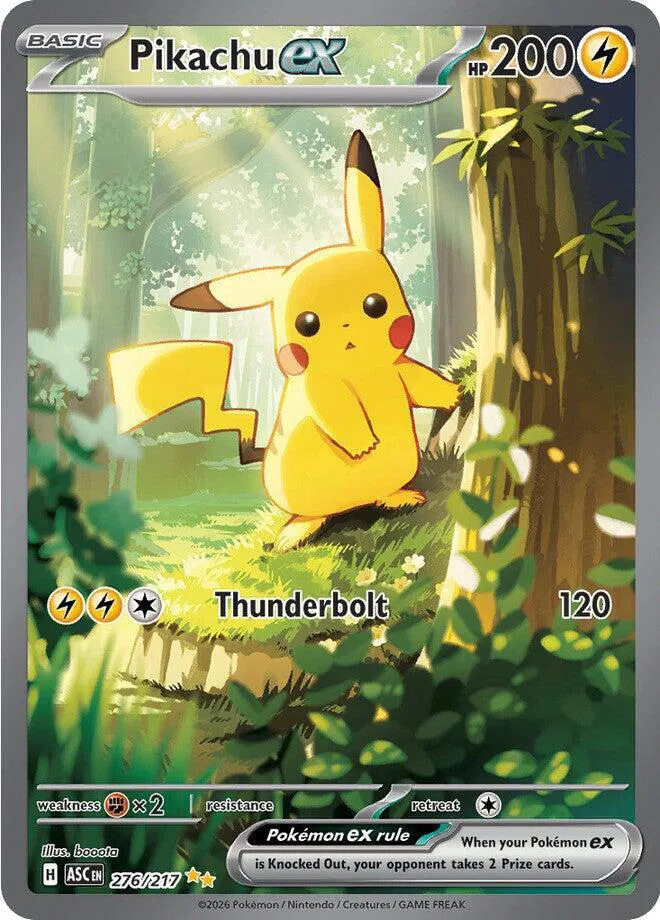
The same source-basis rule showed up again in the June 4 BinderDex source check. Pikachu ex, Ascended Heroes 276/217 reads $1,446.98 in Collectr NM holo, while its older TCGplayer NM row is $1,224.19. Rayquaza Gold Star, EX Deoxys 107, is even more sensitive: the Collectr NM row is $7,173.33, but the older TCGplayer NM normal row is $2,500.99. A pricing note that hides source, variant, and update date is not decision-ready.
The point is not that these exact cards are always the right comparison. The point is that the card, source, condition lane, and route have to stay attached.
| Card and route | Relevant rows checked | Better pricing note | Why it is useful |
|---|---|---|---|
| Pikachu ex, Ascended Heroes, 276/217, possible sale | Collectr Near Mint $1,446.98; TCGplayer NM $1,224.19; TCGplayer LP $856.97 | "Modern chase, exact SIR, inspect back before using NM. LP row is $367.22 below TCGplayer NM." | The range changes when the card moves from clean candidate to Lightly Played. |
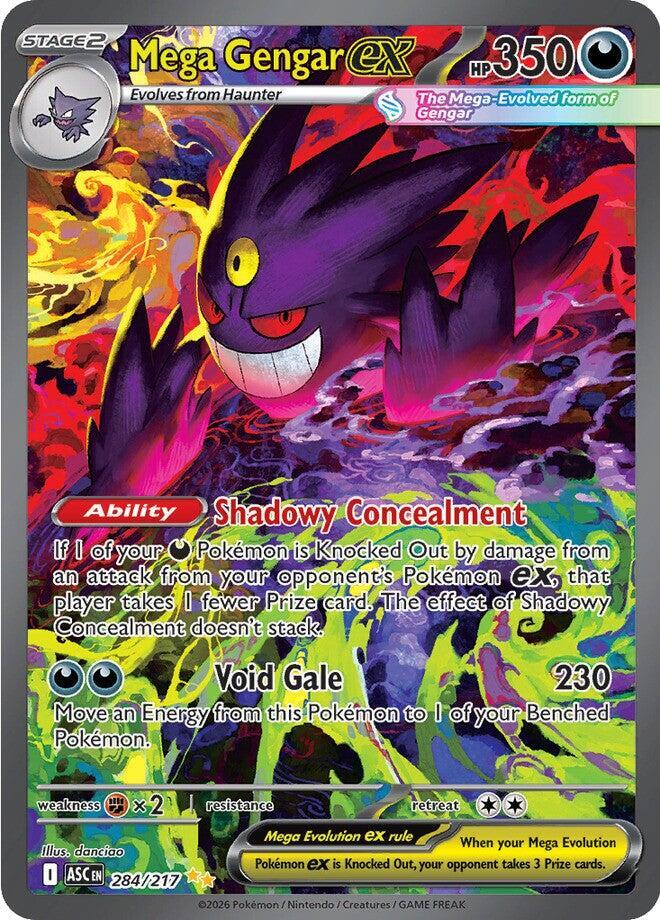
| Mega Gengar ex, Ascended Heroes, 284/217, grading review | Collectr Near Mint $1,360.59; PriceCharting ungraded $1,370.33; Graded 9 $1,325.00; PSA 10 $3,299.00 | "Do not grade only for the 10. The 9-level context needs to work or the route is fragile." | A big PSA 10 headline can hide a weak downside route. |
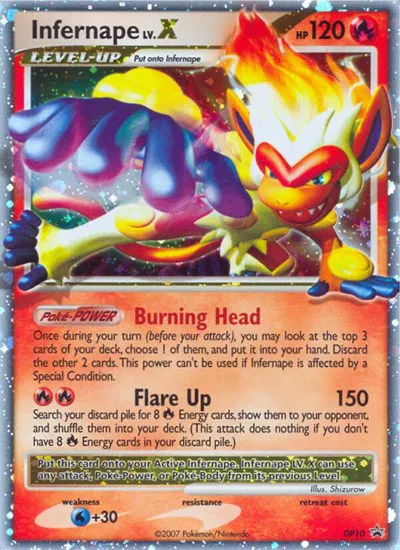
| Infernape Lv.X, Diamond and Pearl Promos, DP10, played-copy sale | TCGplayer NM $77.82; LP $39.51; MP $20.30; Damaged $8.82 | "Condition ladder exists. Price the copy after back whitening, surface, and crease checks." | Older promos can drop sharply once the card leaves the clean lane. |
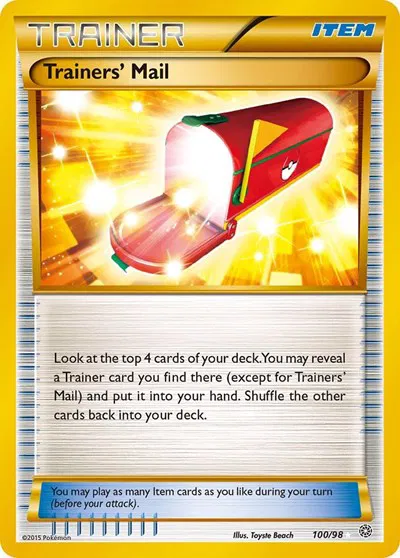
| Trainers' Mail, Ancient Origins, 100, low-dollar single | Collectr Near Mint $6.75; TCGplayer NM $6.76; Damaged $4.25 | "Worth identifying, but probably not worth a heavy individual-listing workflow unless it fits a theme or order." | A real card can have a real price and still be better grouped. |
Condition changes the comparison
Condition is not a small adjustment after pricing. It decides which market you are comparing against.
Look at corners, edges, surface, centering, dents, creases, print lines, and holo scratching. If you cannot inspect condition clearly, the right price range should be conservative.
For a card you own, record the condition notes before you act. For a card you might buy, ask whether the photos support the listed condition. Weak photos mean weak confidence.
Avoid the highest-listing trap
The highest active listing is not the market. It is an ask.
Some sellers price high because they are not in a hurry. Some listings are stale. Some are testing demand. Some are the wrong version. If the highest listing is the only evidence, you do not have a price. You have a headline.
Use a range, document the reason, and revisit the card later if the evidence is too thin. Waiting is a valid pricing decision, especially when the card would be expensive to replace after a mistake.
Common pricing mistakes
Most pricing mistakes come from mixing lanes that should stay separate.
- Comparing the right Pokemon but the wrong set or number.
- Using a PSA 10 sale to price a raw card.
- Treating a damaged sale as a clean-card comp.
- Letting one high active listing define the market.
- Forgetting fees, shipping, and insurance when the card is a sale or grading candidate.
- Recording a price without the reason, source, condition, and next action.
When a note includes those details, the number becomes easier to challenge later. That is useful. A price note should be allowed to change when better evidence appears.
How BinderDex fits
BinderDex helps keep the price attached to the card. Use Explore for exact identity, Portfolio for owned cards, and Watchlist for cards you are not ready to act on.
That separation matters. A card can be interesting without being a buy. A card can be valuable without being a sale. A card can move without needing a reaction.
FAQ
How should I price a damaged Pokemon card?
Start by naming the damage, then compare against damaged or heavily played examples of the same card. Damaged copies should not borrow near-mint prices just because the card name matches.
What if there are almost no recent sales?
Use a wider range and mark the evidence as thin. Older sales, active listings, and related variants can provide context, but they should not be presented as a precise current price.
Should graded prices affect raw-card pricing?
Only when grading is a realistic route. Compare raw value, likely grade range, total grading cost, and grade risk before using slab prices to shape a raw-card decision.
Is market price better than sold comps?
Neither source wins automatically. Market price can smooth noise; sold comps show actual transactions. The most useful range explains which source carried the most weight and why.
What to watch next
- Read How To Check Pokemon Card Value when the exact-card identity or source lane is still unclear.
- Read How To Find Out What Your Pokemon Card Collection Is Worth when the pricing question belongs to a larger box or binder.
- Read How To Track Pokemon Card Prices Without Chasing Every Spike when the right move is patience.
Know exactly what is in your collection.
Download BinderDex on iPhone or Android to track exact printings, organize your binders, and follow card and sealed product values in one place.
Prefer mobile?