How To Find Out What Your Pokemon Card Collection Is Worth
A collection is valued in piles, not all at once.
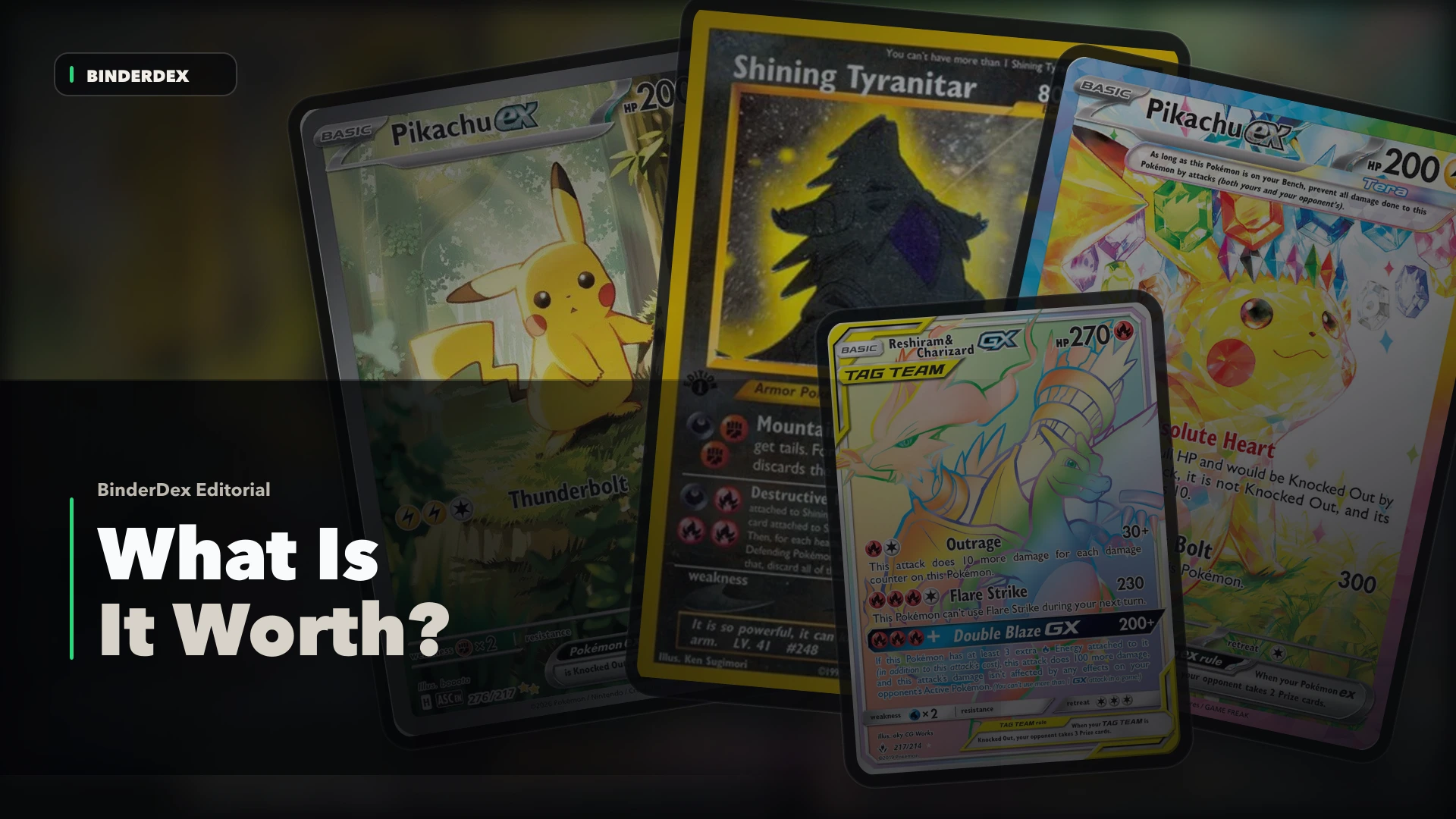
The fastest way to overprice a collection is to let the loudest card speak for the whole box. A real collection value check starts by finding the cards that can change the route, then letting the ordinary pile stay ordinary.
That sounds conservative because it is. Most boxes do not need every card priced one by one. They need the few route-changing cards separated before the total starts pretending to be precise.
The Collection-Value Read
To find out what your Pokemon card collection is worth, start on the table, not in a price search. Sort first, identify exact cards second, and price only the cards that deserve individual research.
A single average value for the whole collection is usually less useful than a small, verified review pile. The larger collector issue is routing: what stays in the binder, what needs verification, what belongs in a sale route, what should wait, and what is simply bulk.
Most people begin with the most exciting card or the first search result. That can make one loud number distort the whole box.
- Sort the collection before pricing anything.
- Give holos, promos, textured cards, slabs, and vintage cards an exact-card review pile.
- Put ordinary bulk, binder-fit cards, and watchlist cards in different piles before adding numbers.
- Use the watchlist for exact cards with thin sold data, unclear condition, or raw-versus-graded uncertainty.
- Use how to check Pokemon card value when exact-card evidence is the blocker.
- Review pile: Holos, promos, vintage, textured cards, slabs, stamped cards, clean popular Pokemon, and unusual variants. These cards can change the total or route, so they need exact identity and condition checks.
- Bulk pile: Modern commons, uncommons, energies, ordinary duplicates, and played filler after the keeper pass. Bulk still has a route, but it should not drive the valuation process.
- Watchlist pile: Exact identity is known, but evidence is incomplete. Use it for thin sold data, wide asking-price spreads, unclear condition, or raw-versus-graded questions.
- Condition spread: Near mint, played, damaged, sleeved, binder-worn. The same card can belong to different comparison sets depending on condition.
- Decision route: Keep, individual-price review, grading review, trade context, watchlist, or bulk route. The estimate should support a next action instead of producing a big number by itself.
I would judge any collection estimate by one standard: does it change the next action? If the answer does not tell you what to verify, what to hold, what to route separately, what to group, or what to set aside, the number is still too abstract to trust.
Collection estimates become more useful when the strongest review-pile cards are tied to exact card pages, condition notes, and a clear next action.
Price and chart data update with BinderDex · Last refreshed Oct 11, 2026. Editorial commentary reflects the article's published snapshot.
The Bigger Collector Issue
The trap is averaging away context. A tidy total can still be wrong if it ignores version, condition, route, timing, or the reason a card matters.
Childhood binders, modern duplicate boxes, slab stacks, and set-filler piles may live in the same room. They are not the same decision.
The review pile keeps the few cards with real decision weight from disappearing inside ordinary volume. It is not an attempt to make every card special.
Instead, it protects the cards where identity, condition, and route can change the answer.
A Better Workflow
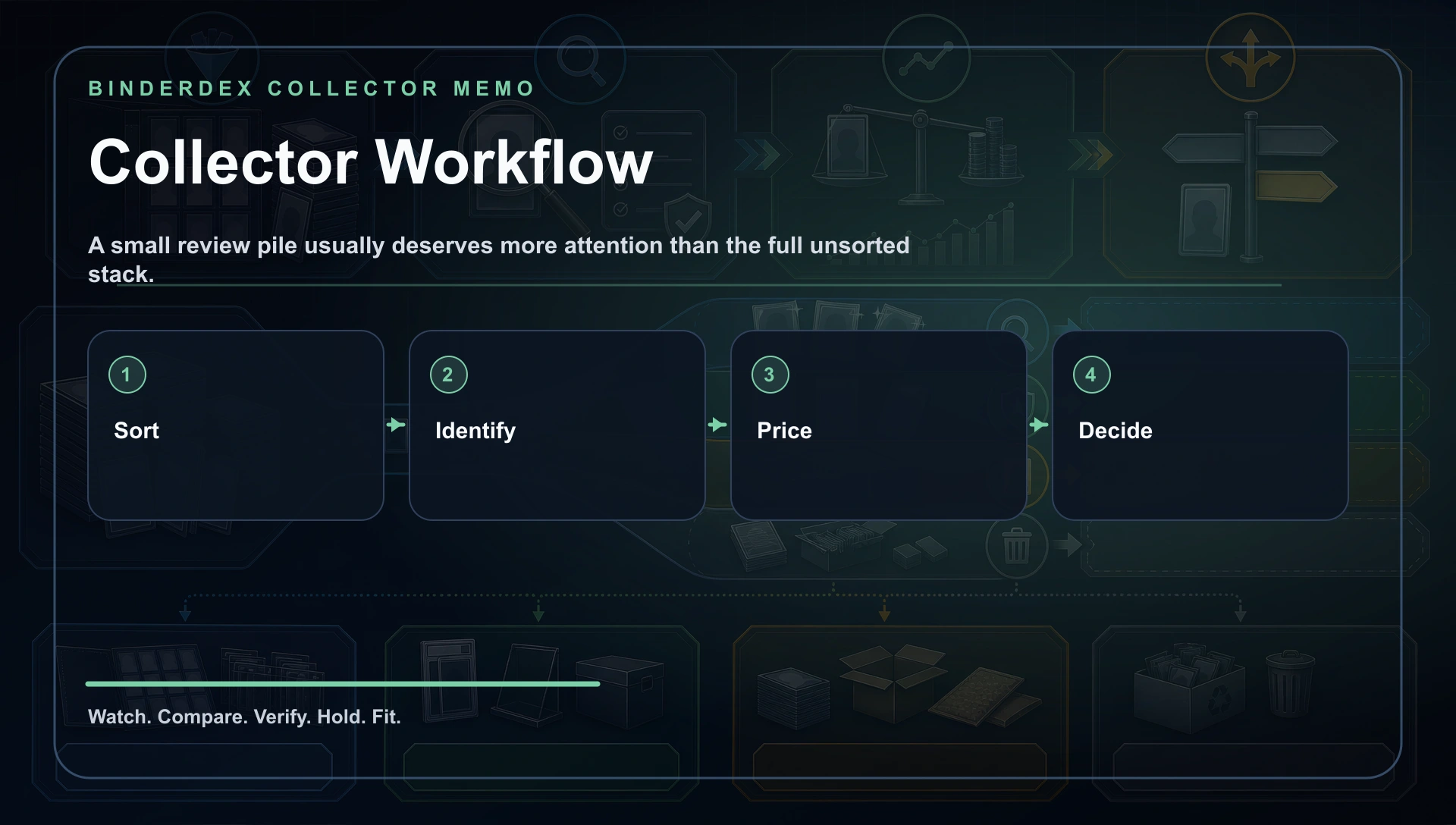
1. Start with a physical sort
Before pricing, split the collection into groups you can actually work through: obvious holos and textured cards, older-era cards, promos and stamped cards, modern rares, slabs, sealed items, and ordinary bulk.
This sort does not need to be perfect. Its job is to keep the strongest signals from getting buried. If you cannot explain why a card deserves individual research, it can wait in a secondary review pile.
Think of it as triage, not a museum catalog. The right outcome is a smaller pile of cards that deserve attention and a larger pile that can be handled by route.
| Pile | Put here | Why it matters |
|---|---|---|
| Exact-card review | Holos, promos, textured cards, slabs, vintage, stamped cards, clean popular Pokemon, and unusual variants. | Identity, condition, or grade context could change the route. |
| Bulk route | Modern commons, uncommons, energies, ordinary duplicates, and played filler after the keeper pass. | These cards usually need a route estimate, not individual research. |
| Binder fit | Set fillers, favorite Pokemon, Pokedex pages, and cards tied to a personal binder goal. | Low cash value can still matter if the card fills a collection need. |
| Watchlist | Exact cards with thin sold data, wide asking-price spreads, unclear condition, or raw-versus-graded uncertainty. | The card is interesting enough to revisit, but the evidence is not clean yet. |
| Damaged or low-confidence | Creased cards, water exposure, trimmed-looking edges, missing authenticity confidence, or weak photos. | They need separate condition language before any number is useful. |
2. Identify exact cards before using price data
For every card in the review pile, confirm the set, number, rarity, language, and variant. A name-only search will mix reprints, promos, alternate arts, reverse holos, and different languages.
The Pokemon TCG database and marketplace card pages can help anchor identity. Once identity is clear, compare only the same version and condition band.
If identity is unclear, stop the valuation there. A confident price on the wrong printing is worse than no price because it gives the collection false precision.
3. Value the review pile, then estimate the rest
The review pile gets individual attention. The rest gets a route-based estimate.
Bulk might move as a lot, trade locally, get donated, fill sets, or stay in binder projects. Treating every card as one spreadsheet often creates false precision.
It is better to have a defensible estimate for the cards that matter and a conservative treatment for the cards that do not. The review pile gets evidence; the rest gets a route until something justifies more attention.
4. Keep your estimate tied to a decision
A collection estimate should point somewhere. Cards that fit your binder may stay in the hold-and-organize lane. Duplicate-heavy review piles may point to an individual route or a lot route.
Condition-sensitive cards may need better photos before the route is clear. The number is only useful when it changes or clarifies the route.
Once each card has a route, the estimate becomes useful. If a card has no clear route after the check, mark it as verify or watch instead of pushing it into a sale, grade, or bulk decision.
Examples That Change The Decision
These examples use BinderDex source rows recorded on June 3, 2026. The point is not to make every collection look like this. The point is to show which cards change the route before a total is useful.
A collection value pass should separate review cards, bulk cards, binder-fit cards, and watchlist candidates before adding everything together.

| Card found during sorting | BinderDex rows checked | Pile it belongs in | Why it changes the estimate |
|---|---|---|---|
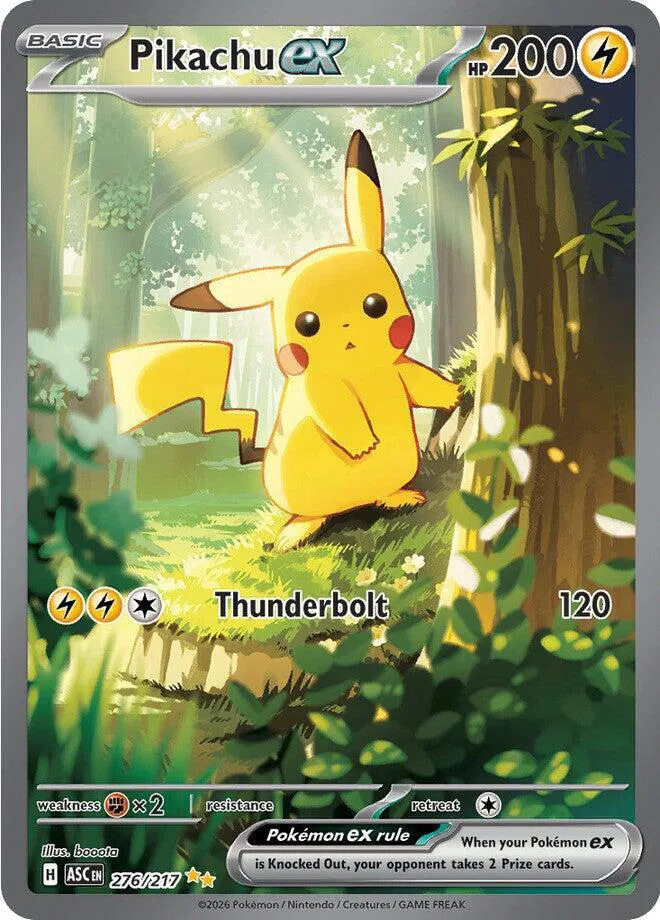
| Pikachu ex, Ascended Heroes, 276/217 | Collectr NM $1,446.98; TCGplayer LP $856.97 | Exact-card review or watchlist. | A four-figure modern chase should not be averaged into the box, and condition decides the lane. |
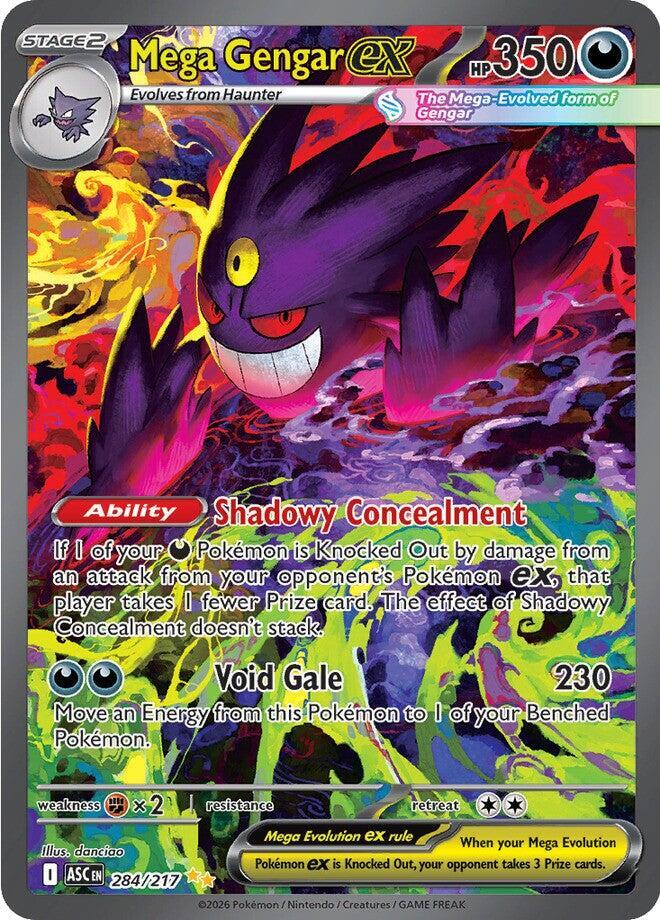
| Mega Gengar ex, Ascended Heroes, 284/217 | Collectr NM $1,360.59; PriceCharting PSA 10 $3,299.00 | Review card plus possible grading research. | Raw, graded, and condition routes are different enough that one collection total can hide the decision. |
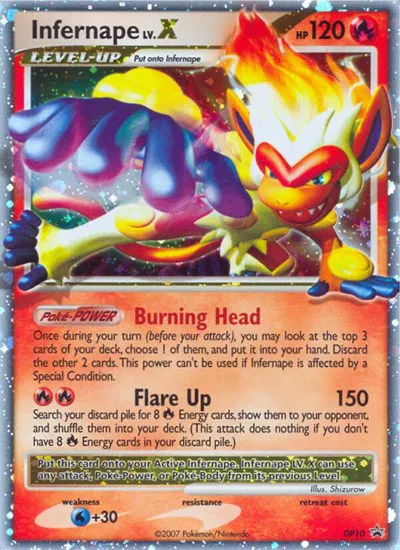
| Infernape Lv.X, Diamond and Pearl Promos, DP10 | Collectr NM $83.48; TCGplayer Damaged $8.82 | Older promo review pile. | A card like this may be a sale candidate, binder keep, or played-card disclosure depending on condition. |
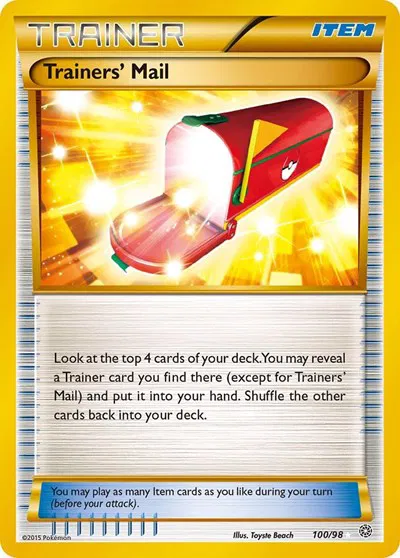
| Trainers' Mail, Ancient Origins, 100 | Collectr NM $6.75; TCGplayer NM $6.76 | Low-dollar review, themed lot, or play/trade pile. | It is not a trophy, but it is too specific to treat as anonymous bulk before the route is chosen. |
| Oddish, Ancient Origins, 1 | Collectr NM $0.61; TCGplayer Damaged $0.15 | Bulk or binder-fit pile. | This is where route value beats individual pricing unless it fills a set page. |
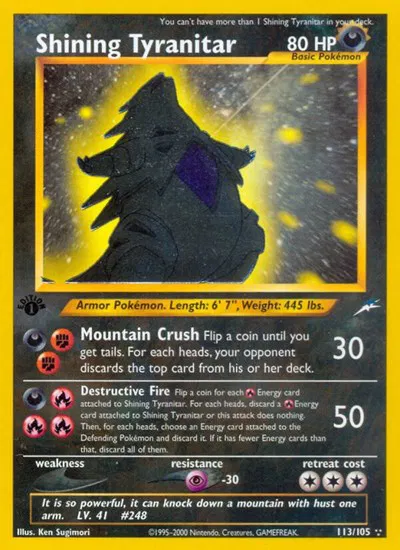
Older holos and condition-sensitive cards should leave the mixed box before the rest of the collection receives a bulk or lot estimate.
Price and chart data update with BinderDex · Last refreshed Oct 11, 2026. Editorial commentary reflects the article's published snapshot.
The point is not that every box has a trophy card. One review-card trigger can still change the route and keep the rest of the estimate honest.
The June 4 BinderDex source check gives a clean example of why this pile exists. Rayquaza Gold Star from EX Deoxys 107 shows a Collectr NM row at $7,173.33, while an older TCGplayer NM normal row is $2,500.99. A source gap that wide should not be averaged into a collection total. It should move the card into exact-card verification, source review, and liquidity review before the number affects the whole box.
A stamped promo, a clean older holo, or a textured modern chase deserves identity and condition work before it becomes part of a blended total.
The watchlist pile is different from the review pile. Review cards have enough signal to research now.
Watchlist cards are identified, but the evidence is not clean enough yet. They need better photos, fresher completed sales, or a clearer raw-versus-graded spread before the collection estimate should lean on them.
Make The Evidence Match The Route
Before you act, ask whether another collector could follow your reasoning from card to route. The exact card should be identified, the condition language should be honest, the route should be named, and the source behind any factual claim should be current enough to rely on.
If one of those pieces is missing, the answer should stay provisional.
A collector does not need certainty about everything. What matters is knowing which uncertainty changes the route.
Unclear identity means verify. Unclear condition means photograph and inspect. Route uncertainty means comparing the work required by each path. A stale source means checking the current official or marketplace page.
For collection value, this standard should produce separate answers instead of one blended answer. A verified review pile can carry individual estimates. True bulk can carry a conservative route estimate.
Binder-fit cards can be held without pretending the cash number is the whole story. Cards with unclear identity, condition, or source context should stay in a verify queue.
Tradeoffs Before You Act
Each route asks for something. Speed saves time but can hide identity mistakes. Detailed research improves confidence but can consume hours on cards where the upside is too small.
A marketplace listing adds photos, messages, packaging, shipping, and dispute risk. Grading can protect and authenticate a card, but it adds cost, time, and grade uncertainty. Holding can fit the collection when the card still supports a real binder goal.
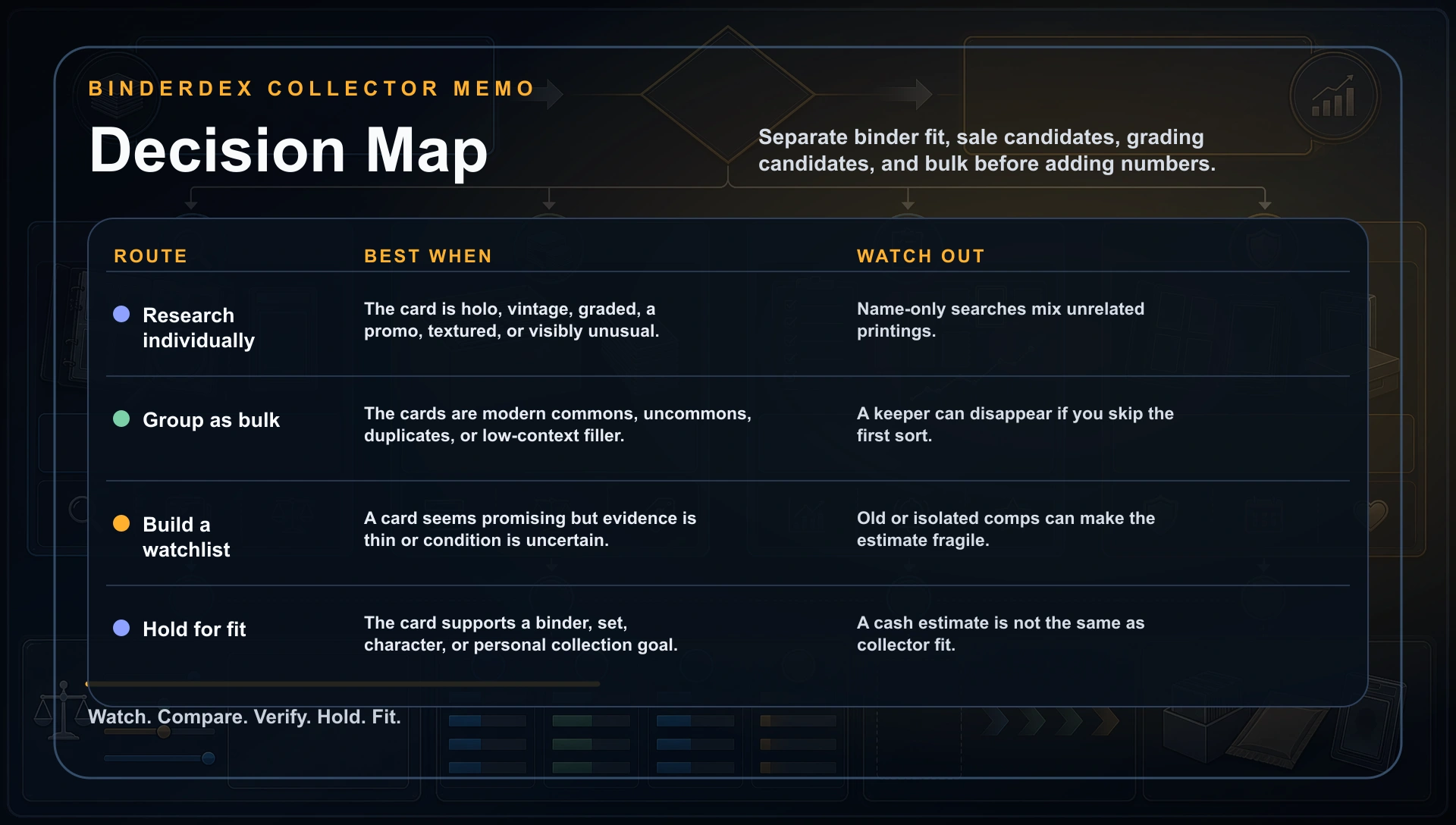
| Action | Best when | Check first | Watch out for |
|---|---|---|---|
| Research individually | The card is holo, vintage, graded, a promo, textured, or visibly unusual. | Set, number, variant, language, and condition. | Name-only searches mix unrelated printings. |
| Group as bulk | The cards are modern commons, uncommons, duplicates, or low-context filler. | Whether any set, Pokedex, or binder goals need those cards. | A keeper can disappear if you skip the first sort. |
| Build a watchlist | A card seems promising but evidence is thin or condition is uncertain. | Recent sold context for the exact version. | Old or isolated comps can make the estimate fragile. |
| Hold for fit | The card supports a binder, set, character, or personal collection goal. | Whether selling would weaken the collection you actually want. | A cash estimate is not the same as collector fit. |
A decision matrix narrows the question until the tradeoff is visible. If two routes still look equally plausible, mark the card for review and gather the missing evidence.
How BinderDex Fits
For this topic, BinderDex preserves exact-card context: card identity, binder fit, watchlist status, portfolio notes, and the reason a card moved into a given route.
That matters most when a messy collection starts turning into owned cards, watchlist cards, and review notes before assigning value.
The problem is usually not too little information. It is information drifting away from the card.
A collector sees a number but forgets the condition. Cards get sorted as bulk and later turn out to fill a set. Slabs get compared against raw comps. A misprint candidate gets remembered as confirmed even though it was only plausible.
Keeping the decision history close to the card makes those mistakes easier to avoid.
Use BinderDex as the operating layer: search the exact card, mark the route, add notes when the evidence is incomplete, and watch the specific version instead of the broad character name.
Then use official sources, marketplace pages, and current policy pages to verify the claims that matter before money, cards, or time move.
For the card-by-card portion of that workflow, use the same exact-identity check from how to check Pokemon card value before the collection total becomes a decision.
If the next question is whether to move cards individually or together, pair the estimate with should you sell Pokemon cards individually or as a lot. The collection total is more useful when it points to a route.
FAQ
Should I price every card in a Pokemon collection?
Usually no. Start with a review pile for cards that might change the estimate, then use conservative route estimates for ordinary bulk, duplicates, and set filler.
What should go into the review pile?
Holos, promos, vintage cards, slabs, textured cards, unusual variants, clean popular Pokemon, and cards with condition-sensitive upside deserve exact identity and condition checks.
How should I handle bulk when estimating a collection?
Treat bulk as a route, not as a precise card-by-card value. Sort out possible keepers first, then decide whether the rest is best used for trade, set filling, donation, local sale, or a bulk lot.
When should I use Portfolio instead of Watchlist?
Portfolio is for cards you own and want to track as part of the collection. Watchlist is for cards or routes that still need more evidence before they become a collection decision.
What To Watch Next
After the first estimate, watch the places where confidence tends to drift: the review pile, condition notes, source freshness, and keeper conflicts.
- Review pile drift: Keep the review pile small enough that every card can receive exact identity and condition attention. Risk: If every card is special, no card gets checked well.
- Condition optimism: Use clear light and inspect surface, corners, edges, and centering before using near-mint context. Risk: Overstated condition is one of the fastest ways to overstate a collection.
- Stale data: Recheck current marketplace pages before using an estimate for a sale route or trade route decision. Risk: The number from last month may not support today's decision.
- Keeper conflict: Mark personal binder cards before assigning sale routes. Risk: A clean spreadsheet can still push out cards you wanted to keep.
Know exactly what is in your collection.
Download BinderDex on iPhone or Android to track exact printings, organize your binders, and follow card and sealed product values in one place.
Prefer mobile?