The Exact-Card Read
Start with the exact card, not the character on it. Set name, card number, rarity, language, finish, and variant come first. Then compare prices for the same version and condition lane.
Active asking prices can still tell you how sellers are positioning the card, but they are not the same as completed sales. Raw, graded, and damaged copies also need separate lanes.
The point is not to grab the highest number on the page. A useful value check should tell you whether this copy fits your binder, trade context, sale route, grading review, or watch goal. If the source does not support that decision, the number is decoration.
- Confirm exact card identity before trusting a price.
- Compare the same condition lane: raw, played, damaged, or graded.
- Use sold and market context instead of one active asking price.
- Tie the number to a decision: keep, watch, grading review, trade context, or sale route.
- Store the card context so the number does not drift away from the card.
- Exact identity: Set, number, and variant. Compare only the same card version. Charizard from Base Set is not the same as Charizard from Evolutions.
- Condition filter: Raw, graded, and damaged. Prices shift by condition. A PSA 10 is not comparable to a raw near-mint card.
- Sold vs. asking: Recent completed sales. Asking prices can be aspirational. Verify against actual sold listings on marketplaces like TCGplayer and eBay.
| Action | Best when | Check first | Watch out for |
|---|---|---|---|
| Check | You have a card in hand. | Set name, card number, rarity symbol, and variant. | Cards with the same name but different set symbols can sit in different markets. |
| Compare | You have identified the exact version. | Recent sold prices, not asking prices. | One high sale does not set the market. Check volume and multiple sources. |
| Decide | The value fits your collection goal. | Whether this card belongs in your binder, trade pile, or watchlist. | Do not let a high price override collector fit. |
Strengthen the input before trusting the number
Use the Pokémon Card Condition Guide to place the physical copy in a defensible raw lane. If the exact printing is still uncertain, compare the workflow in Pokémon Card Scanner Apps and verify every scan against the set and collector number.
Workflow tip: keep the card page, set, number, and watch context attached to the same note. BinderDex is one way to keep that thread from breaking after the first price check.
What Most Collectors Miss
Bad estimates usually start in the search box. Type only "Charizard" or "Pikachu ex" and the results can blend reprints, promos, languages, reverse holos, slabs, and damaged copies into one noisy pile.
That is why a card's value is not a single number attached to a character name. The number only becomes useful after the version and condition match the card in front of you.
A high-value card is only useful as a comparison when the exact set, number, rarity, and condition match the card being evaluated.
Price and chart data update with BinderDex · Last refreshed Oct 11, 2026. Editorial commentary reflects the article's published snapshot.
- Name-only search: Same character, different set. This can mix low-cost printings with chase variants.
- Condition blind spot: No assessment of wear. A heavily played holo can sit far below a near-mint copy.
- Asking price trap: High listed price, no sale. Asking prices are often aspirational; sold listings tell the cleaner story.
The Version Problem
Pokemon TCG reuses names constantly. A Base Set Charizard and a Celebrations reprint share a character, but they do not answer the same collector question.
The same mismatch can happen with alternate arts, stamped promos, reverse holos, and language variants. Read the set symbol, card number, language, and variant before accepting a comparison.
The Condition Gap
Condition changes which listings belong in the comparison at all.
A clean front with back-edge whitening may still sit below true near mint. A small dent can move a card out of the lane you first expected. Once authenticity is established, condition becomes the next filter.
The Asking Price Illusion
Marketplace listings are not transactions. The high asking price you see first may be wishful, stale, or aimed at a buyer who is not comparing carefully.
Completed sales on platforms like eBay or TCGplayer tell a cleaner story, especially when several recent examples cluster around the same condition. One old Buy It Now listing or one auction spike is not enough.
- Sold-vs-asked gap: Verify sold listings, not current asking prices. Risk: asking prices can overstate what buyers actually paid.
- Condition misclassification: Verify condition with a consistent guide before comparing listings. Risk: treating a played card as near mint can inflate perceived value.
Skip those checks and you may still get a price. You just will not know whether it belongs to your card.
The better question is narrower: "what is this exact copy worth right now, given the evidence I can verify?"
A Card-In-Hand Example
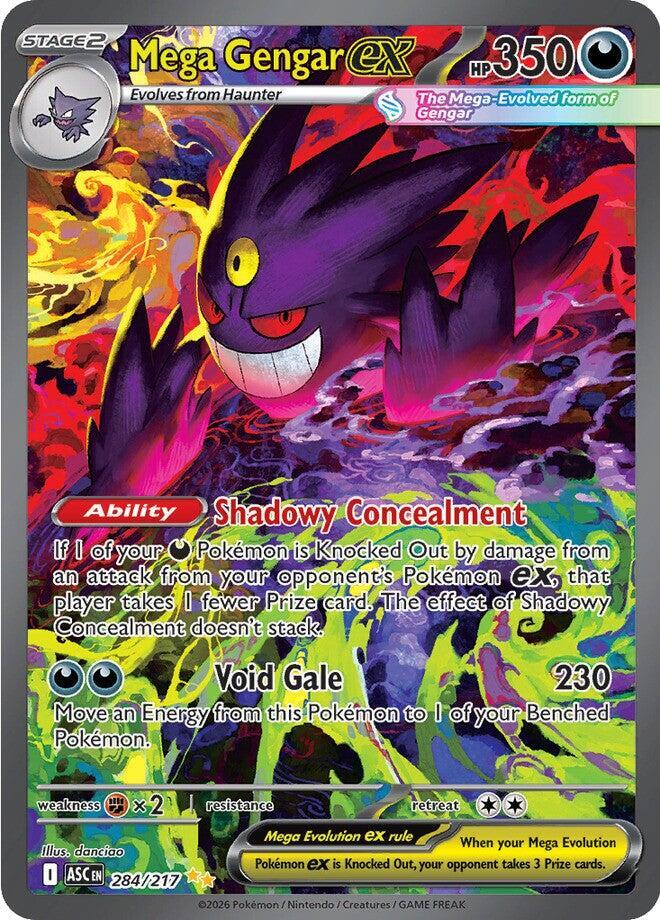
Say the card in front of you is Mega Gengar ex from Ascended Heroes, collector number 284/217. A useful note starts with identity, not price:
"Mega Gengar ex, Ascended Heroes, 284/217, English, raw, front looks clean, back edge needs another photo."
That one line rejects a lot of bad comps. A different Mega Gengar ex, a different collector number, a Japanese copy, a damaged raw copy, and a PSA 10 slab all belong somewhere else.
Sold Versus Asking
Use the same discipline with real rows. In the June 4, 2026 BinderDex source check, Mega Gengar ex, Ascended Heroes 284/217 has a Collectr NM holo row at $1,360.59, while the older TCGplayer NM row is $1,316.45 from May 18. Pikachu ex 276/217 shows an even wider source-timing gap: Collectr NM holo at $1,446.98 versus an older TCGplayer NM row at $1,224.19.
That does not mean one source is "right" and the other is "wrong." It means your value note should say which source, condition lane, and update date produced the number.
The decision-ready note should name the lane first: "raw/NM card page confirmed, high-end modern chase, inspect back before using NM, do not borrow PSA 10 context unless grading is realistic."
If the only sold example is old, the wrong language, or a condition mismatch, mark the card for watchlist review instead of forcing a precise number. A cautious note is better than a confident wrong value.
Raw Versus Graded
The same card can produce three different decisions. A raw copy with a tiny back-edge nick belongs in the raw condition lane. A very clean raw copy may deserve a grading review, but only after condition, fees, shipping, timing, and likely grade range are written down.
A slabbed PSA 9 or PSA 10 belongs with the same company and grade, not with raw near-mint copies.
That is why graded prices are context, not a shortcut. A PSA 10 result can explain why condition matters, but it does not value the raw card in your hand unless that route is realistic for this copy.
Indicators Worth Checking
A price from the wrong version does more than add noise. It can make a collector overvalue a duplicate, overlook a binder fit, or spend time researching a card that already had enough context.
Before trusting a general-search number, check the signals you can confirm yourself.
- Exact card identity: Set symbol, card number, variant, and language. Compare only listings for the same set, number, and print. A Base Set Charizard is not a 25th Anniversary Charizard.
- Recent sold volume: Completed sale prices on eBay and TCGplayer. One high sale does not set value. Look for a cluster of recent sales in the same condition band.
- Condition match: Raw, graded, damaged, sealed, or altered. A clean comparison starts with the same condition context. Raw and graded cards answer different questions.
On TCGplayer, each listing is tied to a specific product and condition, so comparing two Charizard listings without the set symbol is like comparing two different cars by color alone.
eBay's sold filter shows what buyers actually paid, cutting through aspirational asking prices. PriceCharting can add historical context for exact card versions, but it still needs to be checked against the card in front of you.
When you anchor the check to those indicators, the question changes. It becomes less "what is it worth?" and more "does this particular card fit my binder, trade, sale route, or watch goal right now?"
Which Price Source To Use
Price sources answer different jobs. A card page helps lock identity. A marketplace page helps you inspect current supply and condition lanes. Sold listings show what buyers actually paid. Price-history pages show movement. Grading-company pages only belong in the workflow when the card might realistically become a slab.
Use the smallest source stack that answers the decision. A low-dollar set-filler card may need exact identity and a rough market range. A damaged vintage holo needs condition-specific sold comps and photos. A clean modern special art may need raw comps, likely grade range, current grading cost, and a reason the slab route would matter.
| Source route | Best when | Check first | Watch out for |
|---|---|---|---|
| BinderDex card page | You need exact-card identity and a saved decision note. | Set, number, variant, price context, watch reason. | Treating a chart move as an automatic action. |
| TCGplayer | You need current singles context for a known product. | Same product, language, condition, and seller notes. | Confusing market context with your exact copy. |
| eBay sold listings | You need completed-sale evidence or photo-heavy comps. | Sold status, date, photos, condition, shipping. | Mixing active listings, wrong variants, and slabs. |
| PriceCharting | You need longer raw or graded movement context. | Source mix, update timing, and raw/graded lane. | Treating blended history as exact value. |
| Grading company pages | You need grade standards or slab population context. | Company, grade, cert confidence, eligibility. | Letting population alone decide the card's route. |
A practical note should name the source's job before it names the number: "exact card confirmed, raw near-mint lane, sold context mixed, watch again later." When sources disagree, write down the reason instead of averaging everything into one confident value.
Tradeoffs Before You Act
The number is only part of the decision. Condition can swing the practical answer, but so can timing, fees, storage, trade fit, and how much uncertainty you are willing to carry.
That is why the right route depends on the card and the collector goal instead of the highest comp you can find.
| Action | Best when | Check first | Watch out for |
|---|---|---|---|
| Grading review | A higher grade would meaningfully change the card's place in your collection or trade goals. | Recent graded sale prices for the target grade, plus current grading cost and wait time. | Grading adds time, cost, and grade uncertainty. Check the whole route before treating slab comps as useful. |
| Raw route | You need a faster condition read or grading evidence is too thin. | Completed raw sale prices for your exact version and condition. | Raw sale prices often trail equivalent graded sales, and active asking prices can overstate value. |
| Hold | The card fits your binder and you want more condition or market clarity. | Whether the card still fits your collection goal after checking exact-version comps. | Holding is not passive if storage, condition, or collector fit changes. |
| Watchlist | The signal feels incomplete and you want to observe without acting. | The specific card version, not a generic character search. | Avoid mistaking a single high asking price for a trend. Watch sold volume alongside price movement. |
These tradeoffs keep the number from floating away from the actual card. A value is useful only if you would still stand by the decision after checking identity, condition, and recent sales.
How BinderDex Fits
The hardest part of checking value is not opening another price page. It is keeping the right card version, condition note, and collector goal together long enough to make a decision.
BinderDex is built around that workflow: search for the exact card, keep owned cards and grails separate, and use watchlists when the signal is incomplete.
Most value mistakes happen before the price comparison starts. A collector searches a name, finds a high listing, and forgets to ask whether it is the same set, number, variant, and condition.
A version-aware workflow brings that check forward, before the number starts feeling real.
If the source feels confusing, narrow the job: identity, current market context, paid comps, movement history, graded context, or saved collection decision. The source should match that job.
BinderDex keeps the card identity and collection context close enough that the collector can compare, wait, hold, or move on without bouncing between scattered notes.
It also pairs naturally with pricing Pokemon cards without guessing when a card needs a range instead of one number, and with grading-cost math when raw-versus-graded context becomes part of the decision.
Use the Pokémon card value reference hub for the broader map across identity, condition, completed sales, proceeds, and collection records. This article remains the worked card-in-hand valuation procedure.
FAQ
Are active listings useful for checking value?
Active listings can show what sellers are asking, but they should not be treated as the value by themselves. They are most useful after you already know the exact card version and condition.
Should I use sold prices or market price?
Use both when the decision matters. Sold prices show recent completed transactions; market price can add a broader signal. If they disagree, check condition, sale date, and whether the examples are the same print.
How do damaged cards change value?
Damaged cards need their own comparison lane. Do not compare creased, dented, trimmed, written-on, or water-damaged cards against near-mint raw listings or graded examples.
When should I compare raw and graded prices?
Compare raw and graded prices only when grading is a realistic route. Use how to grade Pokemon cards to inspect the card first, then compare the likely grade range with current grading costs.
What To Watch Next
The first value check is a snapshot. Listings age, better comps appear, condition notes improve, and your own collection goal can change.
Revisit the card when the evidence changes, not every time a random asking price pops up.
- New sold comps: Watch completed sales when the last clean comparison is old or thin. Risk: treating stale comps as current market context.
- Condition evidence: Verify with clear photos, surface checks, edge checks, and centering before comparing to near-mint listings. Risk: letting optimistic condition assumptions drive the number.
- Grading cost and timing: Compare current fees and wait times if grading is part of the decision. Risk: committing to grade without checking current costs.
- Exact-version watchlists: Hold the specific card version you care about, not the character name. Risk: mixing unrelated printings into the same decision.
Know exactly what is in your collection.
Download BinderDex on iPhone or Android to track exact printings, organize your binders, and follow card and sealed product values in one place.
Prefer mobile?