Sell Pokemon Cards Individually or as a Lot?
Protect the strong singles. Make the rest easy to understand.
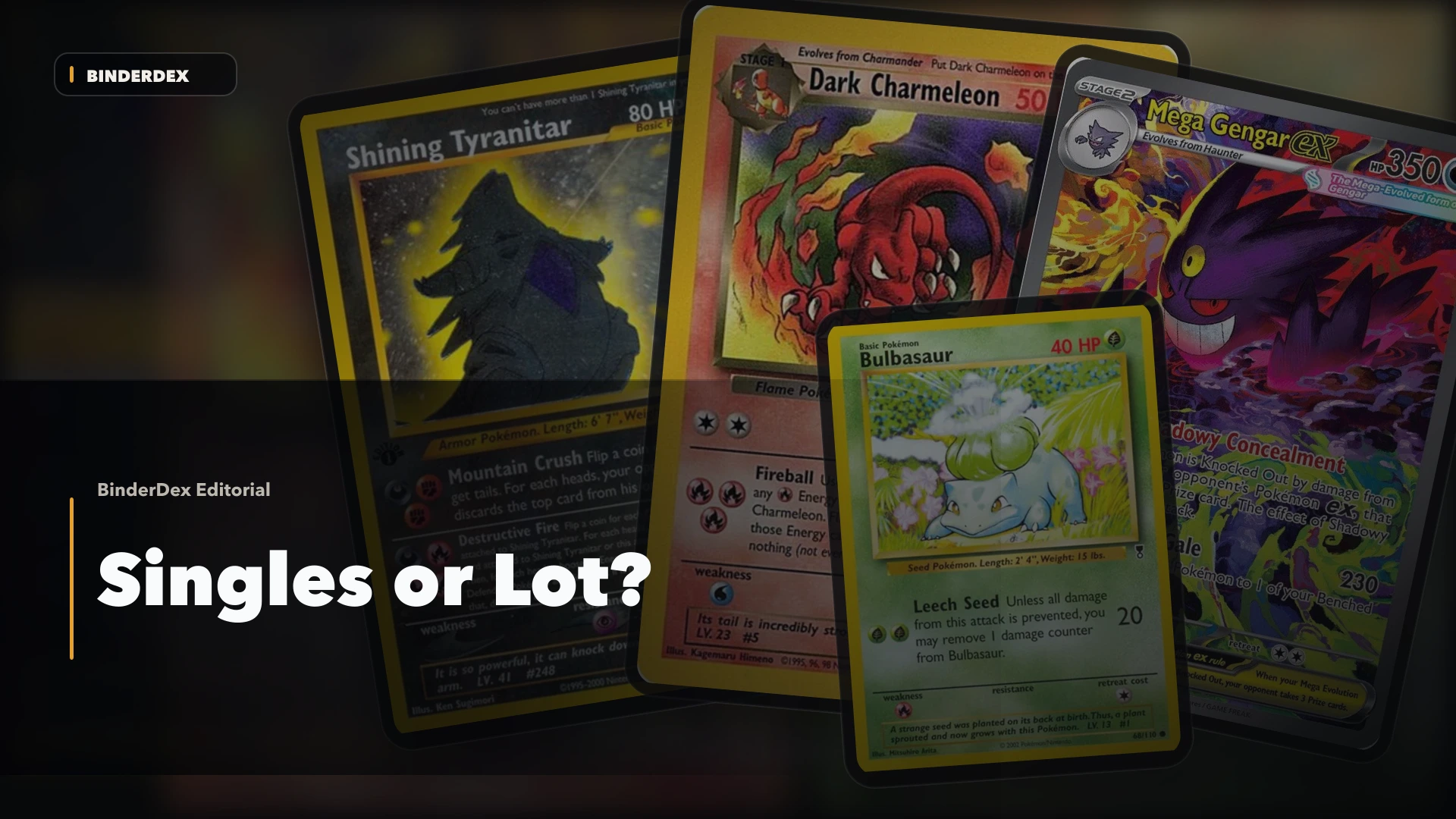
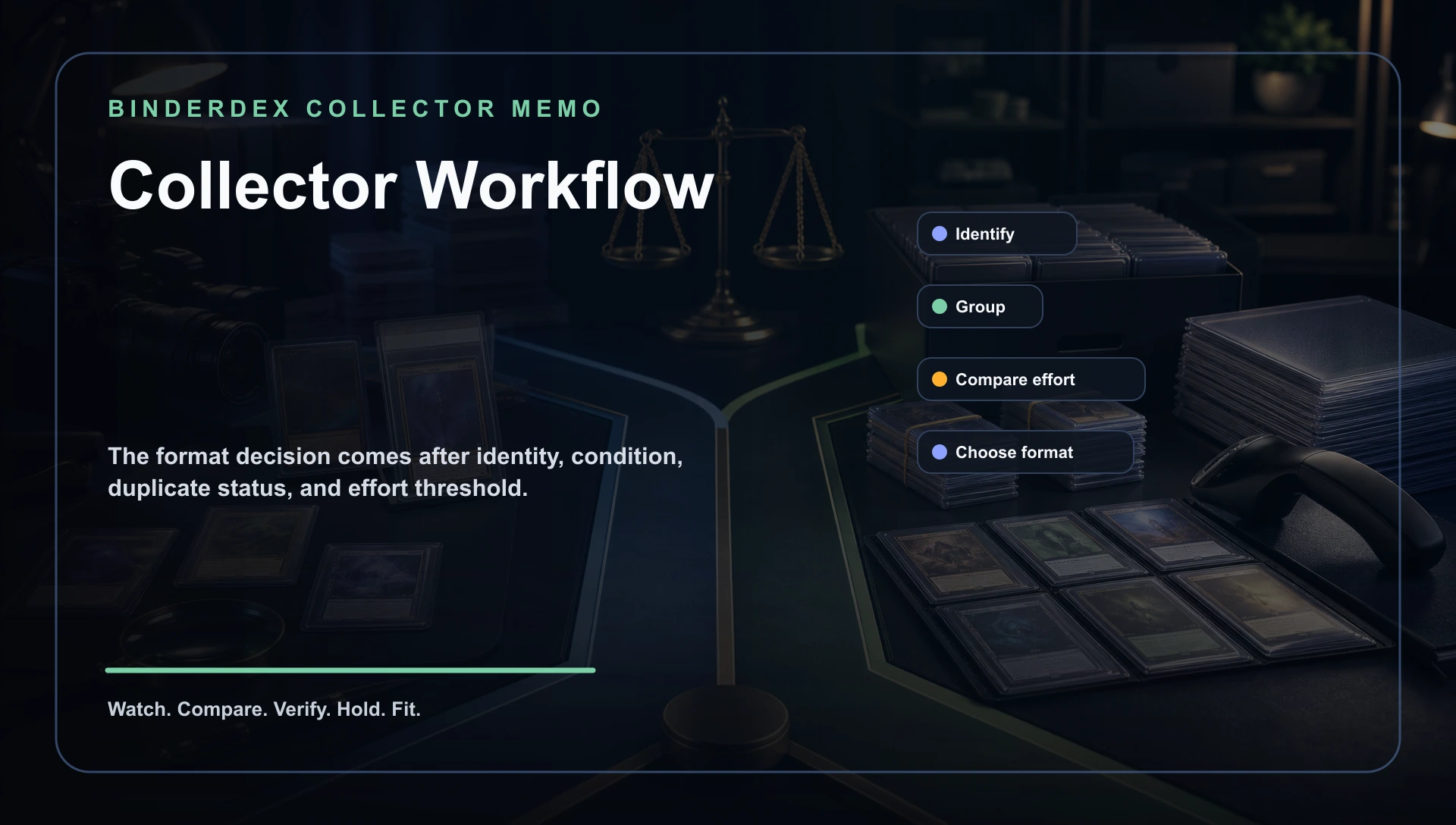
You should not sell every Pokemon card the same way. List a card individually when its exact printing, condition, or demand can change the result enough to justify the work. Build a lot when the group has a clear reason for a buyer to want it. Send genuine low-context volume to a bulk or buylist route. Keep anything you cannot identify, describe, or price with confidence in a hold pile.
That gives you four piles: single, themed lot, bulk or buylist, and hold or verify. An unsorted "collection lot" often means paying the buyer to do the sorting you skipped.
- Choose an individual listing for vintage holos, slabs, scarce promos, popular modern hits, and cards whose exact variant or condition materially changes value.
- Build a themed lot around a set, Pokemon, era, deck role, rarity, or clearly disclosed condition.
- Use bulk or a buylist for ordinary duplicates and set filler after you remove keepers, outliers, and damaged cards.
- Hold cards with uncertain identity, condition, authenticity, or a possible place in your own collection.
- Compare expected net proceeds and active time instead of relying on the highest visible sale price.
Choose from four sale formats
Start with the cards, not the marketplace. Confirm what each card is, give it a condition lane, and remove anything you still want for a binder or set. Then assign one of four routes.
| Route | Use it when | Evidence you need | Common failure |
|---|---|---|---|
| Individual listing | Exact identity, condition, or demand can justify card-level work. | Exact sold matches, useful photos, condition notes, and expected net. | A small price spread disappears into fees, shipping, and time. |
| Themed lot | The group solves one recognizable buyer job. | Count, theme, highlights, condition range, duplicates, and exclusions. | One strong card subsidizes a vague pile. |
| Bulk or buylist | Cards are low-context volume after the keeper pass. | Current quote, accepted conditions, shipping cost, and rejection rules. | Outliers or wanted cards leave with the filler. |
| Hold or verify | Identity, condition, authenticity, or personal fit is unresolved. | Better light, another opinion, exact catalog match, or a collection decision. | Urgency turns an unanswered question into a cheap sale. |
These routes can all come from the same box. That is the point. A mixed collection is not made more orderly by giving every card the same exit.
A clean vintage single, a stamped promo, a modern hit, and an ordinary older card should not inherit the same selling workflow.
![Dark Charmeleon [W Stamped]](https://assets.binderdex.com/collectr/pkmn/wotc-promo/180834.jpg)
When to sell a Pokemon card individually
A card earns its own listing when the extra evidence can improve the outcome. Five checks matter.
1. You know the exact card
Set, card number, finish, language, edition, stamp, and grading company can separate look-alike listings. "Charizard holo" is not an identity. A stamped Dark Charmeleon, for example, should not enter a lot until the stamp and printing are confirmed.
Start with how to check a Pokemon card’s value if you are still matching the card to a catalog entry. Compare sold results for the same version rather than borrowing a nearby card’s best number.
2. You can show the condition
The listing needs enough light and detail for a buyer to inspect the front, back, corners, edges, and any defect that affects the condition claim. Marketplace labels are not interchangeable with grading-company scores. TCGplayer, for example, currently uses Near Mint, Lightly Played, Moderately Played, Heavily Played, and Damaged, not "Mint" or "Gem Mint."
Use the Pokemon card condition guide before pricing a borderline copy. If you would need to explain a crease after the sale, you needed to photograph it before the sale.
3. The demand belongs to that card
A scarce vintage holo, popular illustration rare, graded card, or unusual promo can attract a buyer searching for that exact item. A common duplicate usually cannot. Use recent sold outcomes, not active asking prices, and match the printing and condition as closely as the available evidence allows.
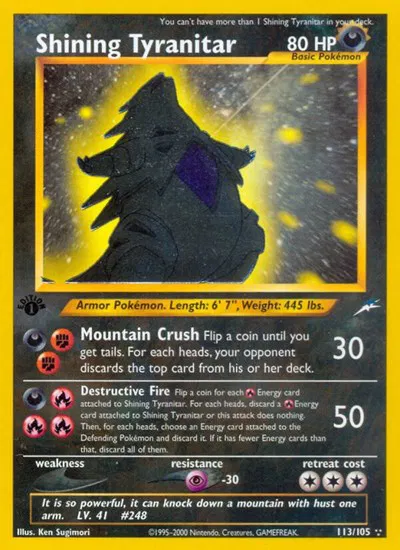
A high-context card needs its own identity and condition evidence. It should not disappear inside a childhood collection lot.
Price and chart data update with BinderDex · Last refreshed Oct 11, 2026. Editorial commentary reflects the article's published snapshot.
4. The expected net clears your effort threshold
Individual listings create more work: research, photos, a precise title, buyer messages, packaging, postage, and possible disputes. Decide what amount makes that process worth repeating. The right threshold depends on your time, selling history, and available route; it is not a universal dollar figure.
5. The card is not a keeper
Liquidity is not a reason to dismantle the collection you actually want. Check set, character, binder, and sentimental goals before moving a card into the sale queue. Cards that are easy to sell are often the ones most annoying to replace.
When a Pokemon card lot makes sense
A good lot is a small product, not a cleanup operation. A buyer should be able to understand why the cards belong together from the title and first photo.
Useful lot ideas include:
- one Pokemon or evolution line;
- set filler from a named expansion;
- playable trainer duplicates;
- reverse holos from one era;
- childhood holos in one disclosed condition range; or
- a clearly counted group of modern ex cards.
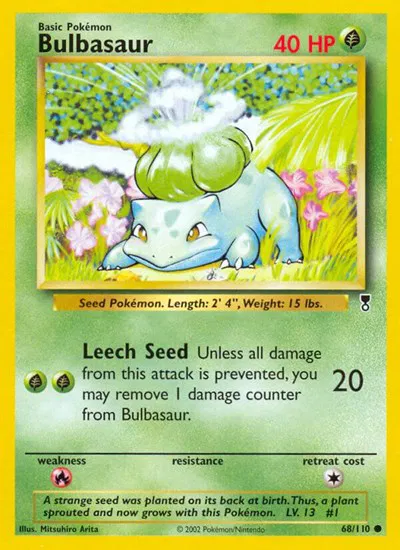
A "151 starter reverse-holo lot" gives the buyer a collecting job they can recognize. "Huge rare Pokemon lot" gives them adjectives. If the theme needs a paragraph of explanation, it probably is not a theme.
What every lot listing should disclose
State the total card count, organizing theme, approximate condition range, whether duplicates are present, which cards are pictured as highlights, and what you removed. If the valuable singles were pulled, say so. If every card is shown, say that instead.
Do not use a strong card as the cover image for a pile whose value mostly depends on that one card. Review it as a single first, then compare the single’s expected net with the lot’s expected net. If the lot only works because one card carries it, the group may not be doing useful work.
Condition can be a valid theme when it is explicit. A played childhood-binder lot may suit a binder builder or condition-tolerant collector. Mixing creased promos into an otherwise clean group without clear disclosure just creates a future argument.
When to use bulk or a buylist
Bulk begins after the keeper and outlier passes. It is a route for low-context volume, not a synonym for "cards I have not checked."
Pull these before requesting a quote:
- cards still needed for your own sets or binders;
- unusual finishes, stamps, languages, and older printings;
- popular Pokemon and playable trainers;
- condition outliers, both unusually clean and clearly damaged; and
- anything you cannot identify quickly.
Then compare the buyer’s current categories, rates, minimums, accepted conditions, sorting rules, shipping responsibility, and rejection policy. A higher headline quote can lose to postage on a heavy box or to cards the buyer places in a lower category.
If the collection starts as an unsorted box, follow the complete bulk Pokemon card sorting workflow. That guide covers the keeper pass in more depth; this one is about choosing the final sale format.
Compare net proceeds and time
Gross sale price is only the first line. For an individual card, estimate:
Expected net: Start with the sale price. Subtract platform fees, seller-paid shipping, packing materials, insurance or signature costs, and expected discounts or losses.
Then estimate active minutes for research, photography, listing, messages, packing, and handoff. A $7 single can be correctly identified and still be a poor individual-listing job. A local offer can be lower than an online sale and better for you after cost, time, and dispute risk.
The following policies were current on August 17, 2026. They are snapshots, not permanent rates.
| Platform constraint | Current official policy | Why it changes the format decision |
|---|---|---|
| eBay collectible-card fees | 13.25% of the total sale amount up to $7,500, then 2.35% on the portion above, plus the applicable per-order fee. | Fees also apply to collected shipping, tax, and certain charges, so the item price alone does not show net. |
| eBay card authentication | Eligible raw and approved-graded trading-card singles priced or sold at $200 or more enter the current Authenticity Guarantee route. | Exact title, description, condition, images, grader, location, and category matter; a lot is not the same eligibility path. |
| TCGplayer Level 1-4 fees | 10.75% marketplace commission plus a 2.5% + $0.30 transaction fee, calculated on different bases. | Do not flatten the charges into one guessed percentage when comparing a single with another route. |
| TCGplayer shipment proof | Tracking is recommended above $20, required above $49.99, and signature confirmation is required above $250. | Postage and proof requirements can change both net and seller risk as card value rises. |
Account type, store plan, category, seller performance, location, and policy updates can change the calculation. Check the official eBay selling-fee page, eBay card-authentication rules, TCGplayer fee schedule, and TCGplayer shipping guidance before listing.
Platform selection is a separate decision. If you already know the cards and format, use where to sell Pokemon cards to compare marketplaces, local shops, shows, and direct sale routes without turning this sorting job into a platform encyclopedia.
A mixed-collection example
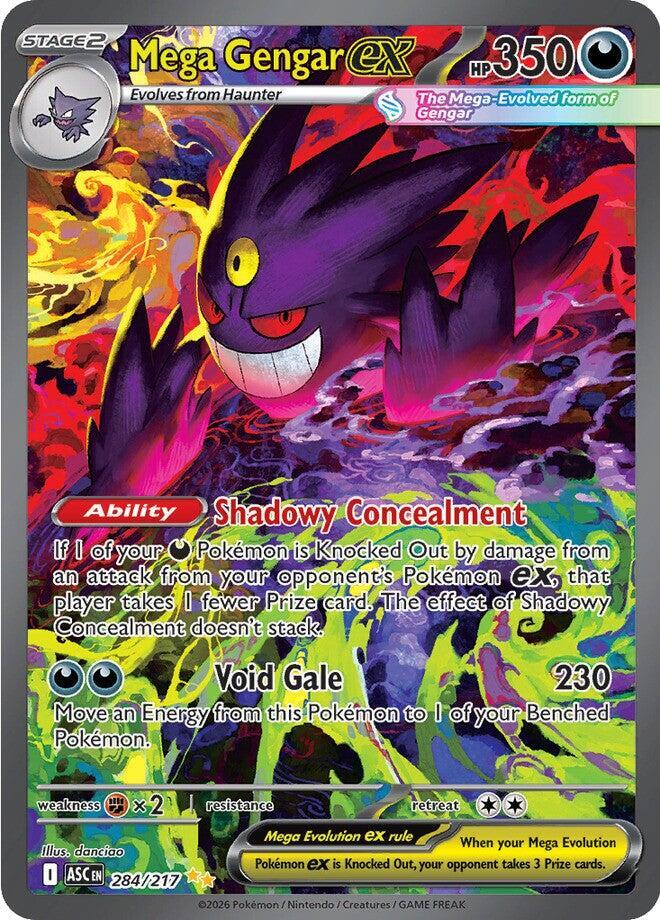
Suppose a box contains one clean Shining Tyranitar, six modern illustration rares, a page of childhood holos with mixed wear, 400 Scarlet & Violet duplicates, duplicate Ultra Ball and Rare Candy trainers, and several creased promos.
Here is the first pass:
- Shining Tyranitar: hold or verify until the exact printing and condition are documented, then compare an individual sale with an in-person offer.
- Six illustration rares: review separately. List the cards whose exact sold evidence and expected net clear your threshold; use a coherent modern-hit lot for the rest only if the group makes sense.
- Childhood holo page: condition first. Strong copies may become singles; similarly played cards can form a disclosed vintage lot.
- Duplicate trainers: group by playable role, set, or quantity if that matches how a buyer would use them.
- Scarlet & Violet filler: pull set needs, reverse holos, playable cards, and overlooked variants, then compare bulk or buylist routes.
- Creased promos: separate by condition. Do not let them weaken the description of a cleaner lot.
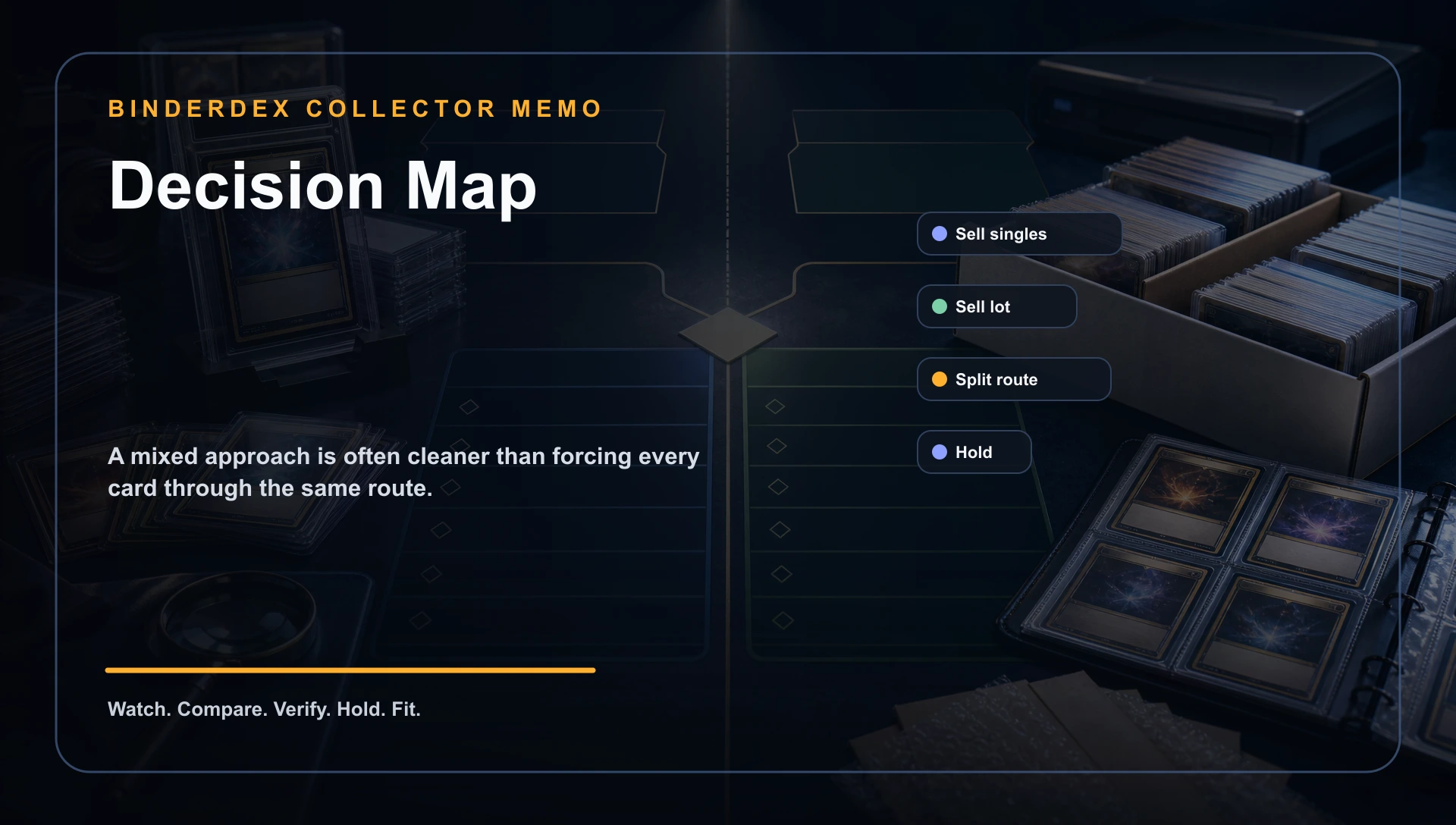
The final answer is mixed: a few individual listings, one or two themed lots, bulk or buylist inventory, and a verification pile. Expensive uncertainty gets more attention than cheap certainty.
How BinderDex fits
BinderDex helps preserve the card context that disappears when a collection becomes a row of boxes. Search the exact card, check whether it fills a binder or set goal, and record why it belongs in the single, lot, bulk, or verification pile.
That record prevents repeat work. It also makes omissions visible: a sale candidate without a confirmed printing, a lot card without a condition note, or a supposed duplicate that actually fills a collection gap.
A clean working loop is:
- Identify the exact card.
- Assign a condition lane and photograph important defects.
- Check recent, genuinely comparable sold evidence.
- Estimate net proceeds and active time.
- Assign the card to one of the four piles and record the reason.
BinderDex organizes the decision; official marketplace and grading sources confirm the details that govern an actual transaction. When grading could change the plan, compare the current cost to grade a Pokemon card before assuming a raw sale or a submission is automatic.
No single rule fits the whole box. Protect the cards whose context matters. Give each remaining group a job a buyer can understand. Let true low-context volume be bulk. Leave unresolved cards out of the shipping box.
FAQ
Is it better to sell Pokemon cards individually or in bulk?
Sell individually when exact identity, condition, and demand can produce enough additional net value to justify the work. Use bulk for ordinary, low-context volume after removing keepers, valuable outliers, unusual variants, and damaged cards.
How valuable should a Pokemon card be before I list it alone?
There is no universal cutoff. Compare the card’s expected net after fees, shipping, supplies, and likely discounts with the active time and risk of the sale. Your threshold can also change with marketplace experience and whether you can combine shipping.
What makes a good Pokemon card lot?
A good lot has one buyer-readable theme, an accurate count, a disclosed condition range, a duplicate note, clear highlights, and explicit exclusions. A set-filler lot or one-Pokemon collection is easier to evaluate than a vague mystery pile.
Should I put one valuable card in a larger lot?
Review the valuable card separately first. If its own identity and condition drive most of the lot’s expected price, an individual listing or separate offer usually gives both sides clearer evidence.
Can damaged Pokemon cards go in a lot?
Yes, when the condition is obvious in the title, photos, and description. Separate damaged cards when they would otherwise make the condition range of a cleaner lot misleading.
Where should I sell the cards after sorting them?
The right route depends on card type, desired speed, fees, local access, shipping comfort, and seller experience. Compare the current options in our guide to where to sell Pokemon cards.
What to watch next
- Work per card: Count research, photos, messages, packing, and handoff. Risk: a small price advantage can vanish into active time.
- Lot clarity: Use a count, theme, condition range, duplicate note, and exclusions. Risk: ambiguity shifts the sorting problem to the buyer.
- Strong-card leakage: Recheck lot and bulk piles for variants and clean outliers. Risk: one high-context card can disappear into low-context pricing.
- Shipping proof: Match protection, tracking, insurance, and signature service to current platform rules. Risk: gross price overstates the usable return.
- Personal fit: Pull set, binder, and sentimental keepers before requesting offers. Risk: a fast sale creates an expensive replacement job.
Know exactly what is in your collection.
Download BinderDex on iPhone or Android to track exact printings, organize your binders, and follow card and sealed product values in one place.
Prefer mobile?