What Are Bulk Pokemon Cards Worth In 2026?
Bulk is a route, not a verdict.
Bulk value is useful only after the pile has been cleaned of impostors. A box can be mostly bulk and still contain the one holo, promo, playable trainer, or binder-needed card that changes the route.
- Bulk value only means something after the keeper pass.
- A recent-set duplicate box, a childhood shoebox, and a set-filler tray are different bulk questions.
- Pull holos, promos, older cards, textured cards, playable trainers, and active binder needs before counting.
- Use current buyer requirements for the route you are considering.
- Keep low-price cards when they still fill a set, Pokedex, deck, or binder goal.
The Short Answer
Bulk Pokemon cards are worth different things depending on what is left after the keeper pass. A recent-set duplicate box, a childhood shoebox, and a set-filler tray should not share the same answer.
The practical 2026 question is not "what is the rate?" first. It is "which cards are still in the box?" Modern commons, uncommons, duplicate energies, played filler, and true extras may belong to a bulk route.
Older cards, childhood-binder holos, promos, textured cards, language variants, playable trainers, and sharp condition exceptions deserve their own review before the label sticks.
- True bulk: Modern commons, uncommons, energies, duplicate rares, played filler. These cards are route-based once the review cards are gone.
- Pull-first cards: Holos, promos, vintage, textured cards, playable trainers, popular character cards. These can change the route.
- Condition outliers: A clean older non-holo, a sharp reverse holo, or a creased promo can belong somewhere other than the main count.
- Time cost: A two-hour sort should protect the cards that change the answer. It does not need to turn every common into a research project.
The useful first question is: what should leave the pile before the pile is allowed to be bulk? That protects the cards that can change the decision. For the review pile, use how to check Pokemon card value instead of pricing the whole box at once.
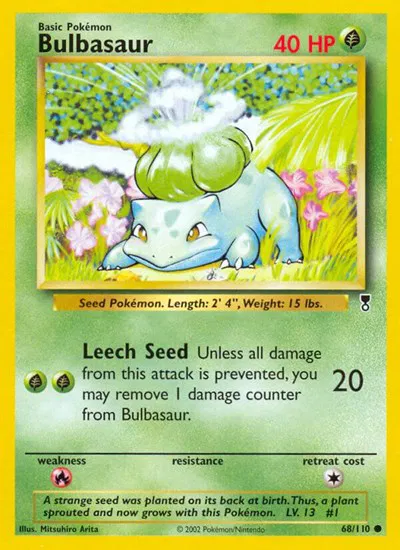
A card can look like ordinary volume until exact identity, era, and condition are checked. The bulk route should come after the keeper pass.
The Bigger Collector Issue
A fixed bulk number is useful only after the pile has been defined. Before that, it can hide the cards that deserved attention.
Picture three boxes. One is 3,000 modern duplicates from recent openings. One is a childhood shoebox with WotC-era backs mixed into trainer cards. One is a set-builder tray sorted by number.
All three can contain low-price cards. Only the first one is close to true bulk at the start. The second needs era and condition review. The third may be more useful as organized set filler than anonymous volume.
Spend enough time to remove cards that could change the route. More sorting than that may waste effort. Less sorting than that can turn a mixed collection into a weak bulk answer. If the box is still mixed after the first pass, read how to sell bulk Pokemon cards without missing the keepers before asking for a number.
A Better Workflow
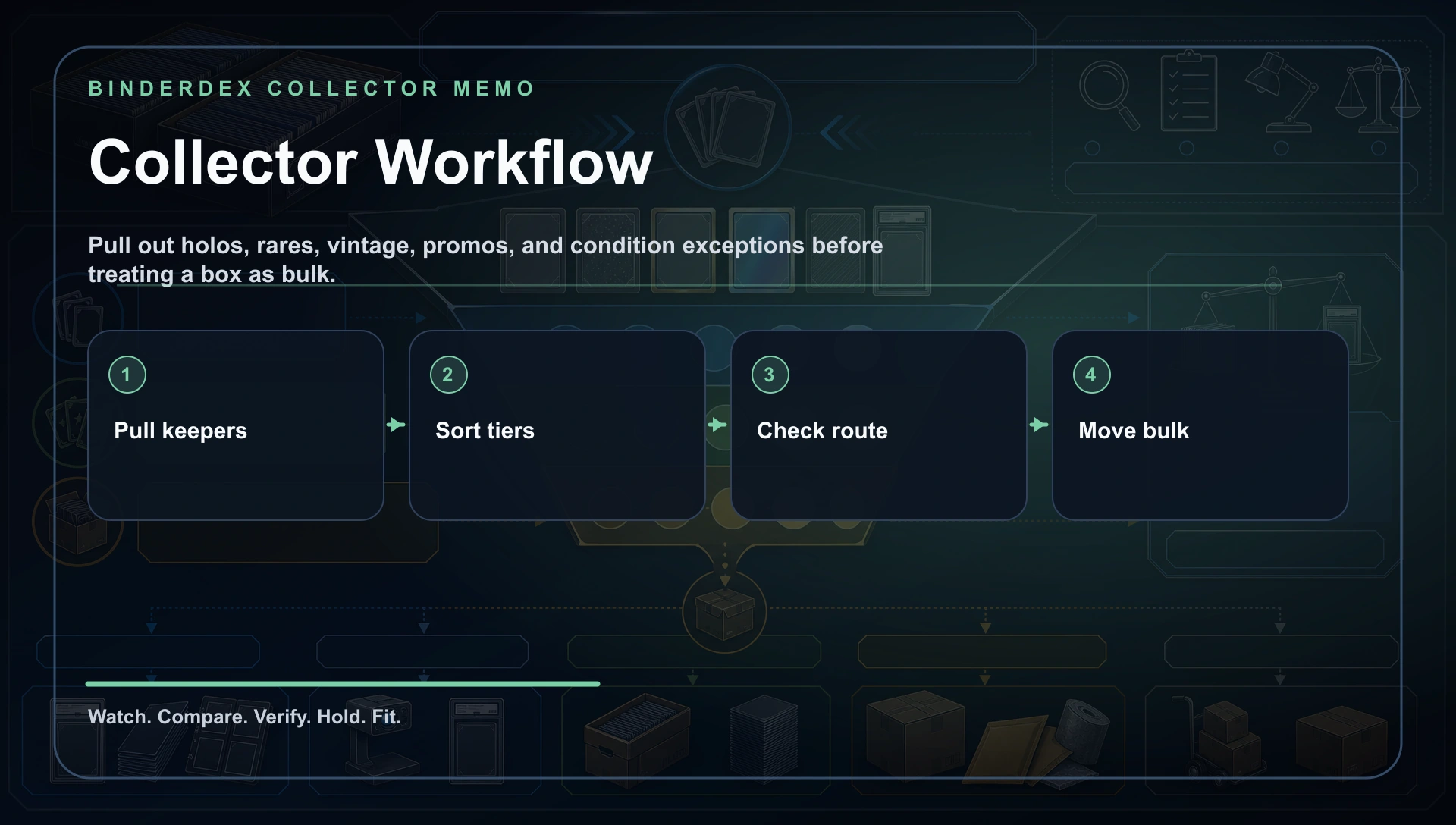
1. Define bulk only after the keeper pass
Do not start by pricing the whole box. Start by asking what should not be in the box when it leaves.
Pull holos, textured cards, promos, older cards, stamped cards, obvious character cards, playable trainers, and cards that fill active set goals. After that pass, the remaining cards are closer to true bulk.
The keeper pass is the control point. If a card has identity, condition, age, or personal-fit reasons to pause, it should not be carried by a bulk-rate assumption.
2. Sort by route, not by excitement
The useful categories are plain: shop bulk, trade bulk, playable cards, binder filler, donation cards, and damaged cards. Each route has different handling.
A local shop may want clean, sorted modern bulk with no damaged cards. A set builder may want numbers grouped by expansion. A family deck box may value duplicate Ultra Ball and Rare Candy more than random commons.
Route sorting keeps the answer practical. A pile that is useful to a set builder is not the same as a pile that belongs in a shop buylist or a donation box. When the pile has a clear theme or era, compare the bulk route against selling Pokemon cards individually or as a lot.
3. Avoid stale rate claims
Bulk rates move with retailer demand, shipping costs, set cycles, and buyer appetite. Any fixed number needs current buyer pages or a local offer before it drives a decision.
If a current buyer page does not support the number, treat the number as planning context. The route and requirements matter more than an old rate screenshot.
4. Use BinderDex to protect set and Pokedex goals
Bulk has a hidden collector risk: moving cards that quietly support a set, Pokedex, character, or binder project. Before a large pile leaves the collection, mark the cards that serve an active goal.
A low-price card can still have collection utility. A reverse holo needed for a master set, a missing Pokedex slot, or a duplicate for a kid's deck should not be valued only by the bulk route.
Examples That Change The Decision
- Recent-set duplicate box: After rares, reverse holos, playable trainers, and favorites are removed, the rest may be true bulk. The route question becomes shop, trade, donation, or future deck-building.
- Childhood shoebox: Treat it as unsorted until older cards, promos, clean holos, and unusual languages are checked. A few review cards can change the whole session.
- Set-builder tray: Cards sorted by number may serve another collector better than a weight-based bulk route. The organization is part of the value.
- Clean older holo inside modern filler: Pull it immediately. Even if the rest of the box is ordinary, this card needs exact identity and condition context.
- Playable trainer stack: Duplicate Nest Ball, Ultra Ball, Rare Candy, or similar trainers may belong in a play/trade pile instead of the lowest-friction bulk route.
The same box can contain several routes. The point is not to research every common for hours. It is to stop obvious review cards from being priced as anonymous volume.
What To Verify Before You Price Bulk
Bulk pricing needs a modest proof trail. Confirm the pile type, condition range, era mix, duplicate density, and route requirements before trusting a number.
For a local shop route, check whether energy cards, code cards, damaged cards, Japanese cards, or unsorted rares are accepted. For a marketplace lot, show the count, era mix, duplicates, and exclusions.
If those facts are missing, keep the label modest: sorted modern bulk, mixed-condition lot, set-filler pile, trade box, or needs another review pass. A box may still move without perfect certainty, but the label should match what you checked.
Tradeoffs Before You Act
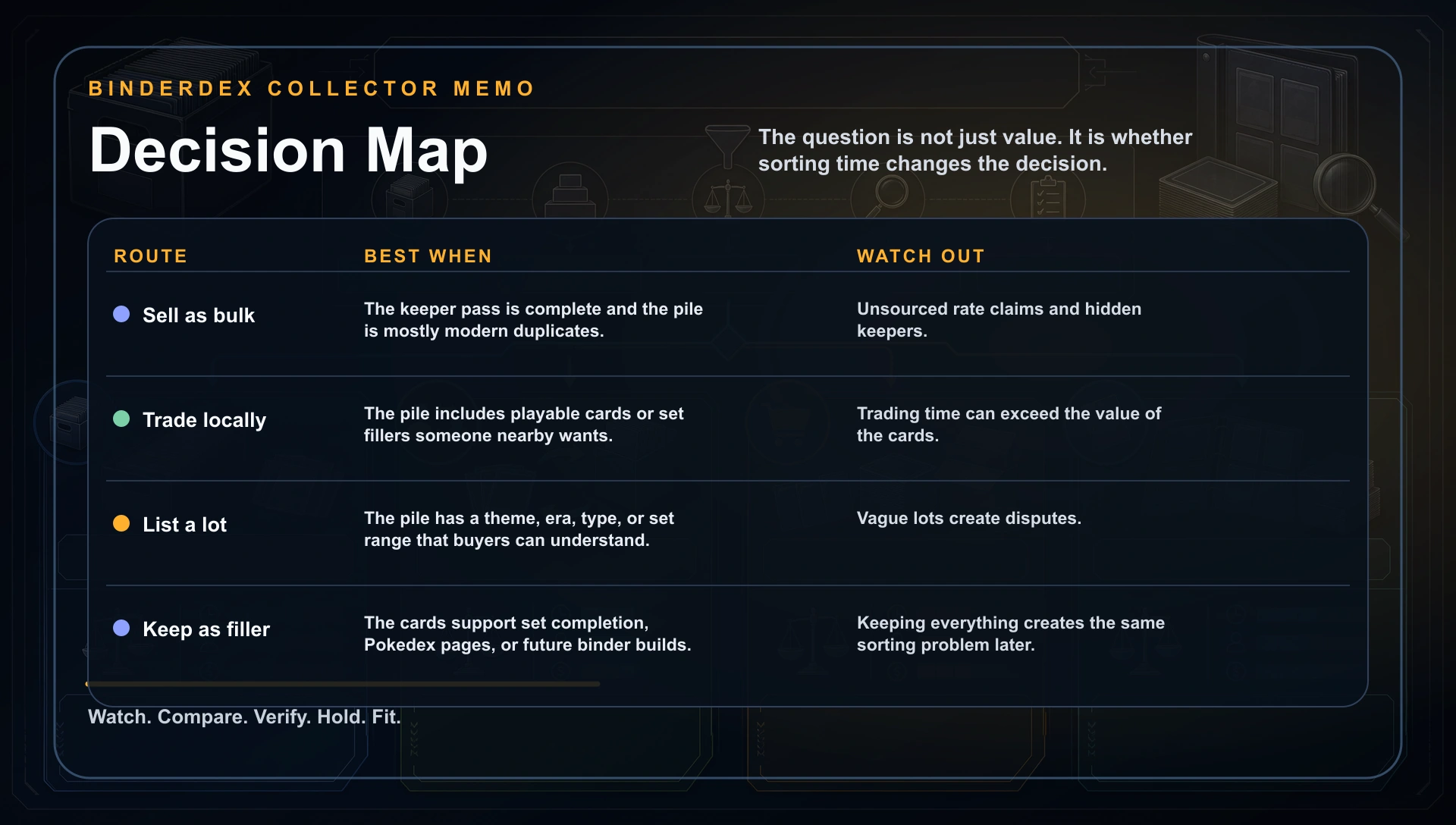
Every route spends a different kind of effort. Speed saves time but can hide identity mistakes. Detailed research improves confidence but can consume hours on cards that do not justify it. A marketplace listing can reach more buyers but adds photos, messages, packaging, shipping, and dispute risk. Holding can be the right collector move when a low-price card still fits a real collection goal.
| Action | Best when | Check first | Watch out for |
|---|---|---|---|
| Sell as bulk | The keeper pass is complete and the pile is mostly modern duplicates. | Current buyer requirements, sorting rules, and shipping expectations. | Hidden review cards and old rate claims. |
| Trade locally | The pile includes playable cards, set fillers, or character extras another collector wants. | Condition, organization, and whether the trade serves your binder. | Trading time can exceed the value of the cards. |
| List a lot | The pile has a theme, era, type, or set range a buyer can understand. | Photos, count, condition range, duplicate density, and exclusions. | Vague lots create disputes. |
| Keep as filler | The cards support set completion, Pokedex pages, deck boxes, or future binder builds. | Which cards are actually needed. | Keeping everything creates the same sorting problem later. |
If a card could change the route, it does not belong in the bulk count yet. Pull it, identify it, and decide separately. If the card cannot change the route after a reasonable check, let it move with the pile.
Pause before accepting the bulk route when the pile reveals older-era cards, cleaner condition than expected, a buyer with specific sorting requirements, or a set goal that makes ordinary duplicates useful.
How BinderDex Fits
BinderDex fits the keeper pass. Use it to preserve exact-card context: card identity, binder fit, watchlist status, portfolio notes, and the reason a card moved into a given route.
That matters because collection context gets detached from cards during long sorting sessions. A card gets sorted as bulk but later turns out to fill a set. A playable trainer gets counted with filler. A clean older holo gets buried under modern duplicates.
During the keeper pass, use BinderDex to search the exact card, mark the route, and add notes when identity or condition is incomplete. A note can be as simple as "verify set symbol," "needed for Paldea Evolved reverse page," or "bulk after trainers removed."
For a fast pull pass, use Explore to check exact card identity and Pokemon Sets when set symbols or era are unclear. If a card looks grade-sensitive, pause and use how much it costs to grade a Pokemon card before it disappears into the bulk count.
FAQ
Are modern duplicate Pokemon cards always bulk?
Not always. Many modern duplicates are bulk after the keeper pass, but playable trainers, popular Pokemon, reverse holos, promos, and cards needed for set pages belong in the review pile first.
Should I price a childhood binder as bulk?
No. Treat a childhood binder as an unsorted collection until you check era, set symbols, holos, promos, condition, and obvious character cards. The bulk label should come after that review.
Are playable trainer cards bulk?
Some are, but do not assume it. If a trainer sees play, helps a family deck, or trades well locally, it may belong in a play/trade pile instead of the lowest-effort bulk route.
What if the bulk has damaged cards mixed in?
Separate damaged cards before quoting the pile. Damaged cards can still have a route, but they should not be described as clean bulk or mixed quietly into a better-condition lot.
What To Watch Next
- Buyer requirements: Check current bulk buyer rules before sorting thousands of cards to an old standard. Risk: Accepted categories and conditions can change.
- Shipping drag: Bulk is heavy, so packaging and postage can change the route. Risk: A theoretical offer can weaken after shipping work.
- Era mix: Separate older cards from modern bulk before accepting a bulk route. Risk: Vintage and older-era cards need a second look.
- Binder loss: Check set and Pokedex needs before removing duplicates. Risk: A card can be low value and still be useful.
Keep watchlist moves separate from your binder.
Download BinderDex on iPhone to track exact cards, organize portfolio decisions, and avoid turning every short-term price move into a buy.